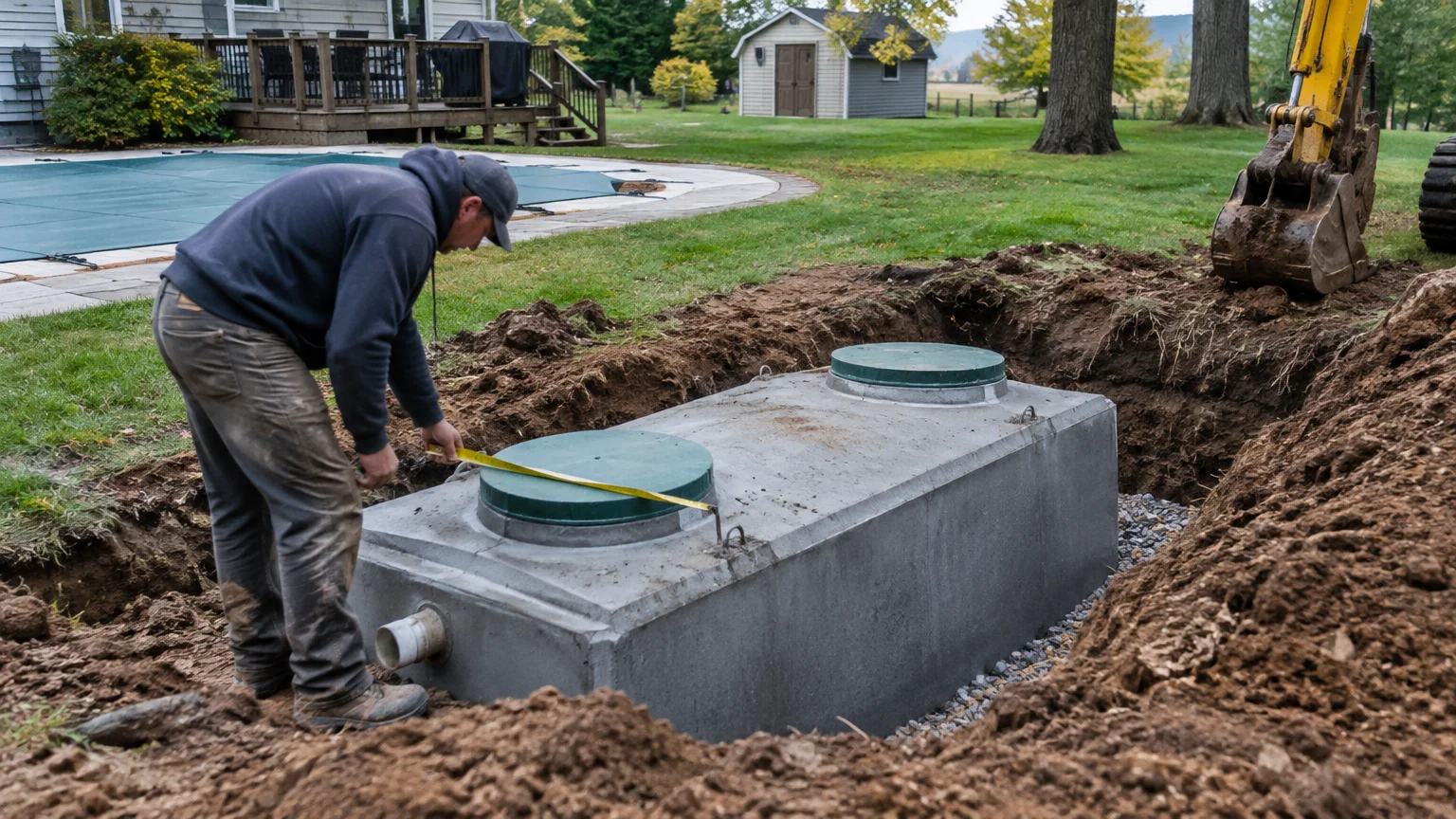
A 1000-gallon septic tank is often about 8 to 10 feet long, 5 to 8 feet wide, and 5 to 7 feet tall. Exact sizes vary by maker, material, and tank shape. The site also needs safe access, proper burial depth, and enough room for septic pumping equipment.
Table of Contents
- What Are the Typical Dimensions of a 1000 Gallon Septic Tank?
- How Much Space Does a 1000 Gallon Septic Tank Need?
- How Deep Is a 1000 Gallon Septic Tank Buried?
- What Changes the Size and Shape of a 1000 Gallon Septic Tank?
- What Setbacks Apply to a 1000 Gallon Septic Tank?
- How Can You Find a 1000 Gallon Septic Tank on Your Property?
- Is a 1000 Gallon Septic Tank Large Enough for Your Property?
- Key Takeaways
- Frequently Asked Questions
- Conclusion
What Are the Typical Dimensions of a 1000 Gallon Septic Tank?
A 1000-gallon tank usually measures several feet in length, width, and height. Many models use a ground footprint of roughly 40 to 80 square feet. The exact measurements should come from the maker’s drawing or the property records.
Common Length, Width, and Height Ranges
A common concrete tank may be 8 to 10 feet long. Its width may measure 5 to 8 feet. Its height often falls between 5 and 7 feet, though some tanks are taller or more compact.
These are outside measurements. They do not show the usable liquid level inside the tank. Wastewater stays below the inlet pipe. The open space above it helps hold solids and gases in place.
Tank shape also changes the measurements. A long, narrow tank may fit a tight yard. A shorter, wider tank may work better on open ground. A round tank may use less surface space but need a deeper hole.
A tank’s gallon rating does not show its full size. Two tanks can hold the same amount but have different measurements. Always check the actual model instead of using a general size chart.
Why Actual Dimensions Vary by Manufacturer
Manufacturers use different molds, walls, covers, and inside layouts. Concrete tanks often have thick walls. Plastic and fiberglass tanks may have thinner walls but need strong support during installation.
The inlet and outlet locations also matter. A tank with unusual pipe locations may need more room for trenching. Some tanks have access openings built in. Others need risers and covers added later.
Property owners can ask for the tank model, maker’s sheet, or installation record. These records are more useful than a general online estimate. Septic Tank Pumping Rogers can also help Rogers property owners understand which measurements matter before septic tank pumping or repair work.
How Much Space Does a 1000 Gallon Septic Tank Need?
A 1000-gallon tank needs more space than its visible footprint. The digging area must allow room for safe placement, pipe connections, bedding, backfill, and checks. Heavy equipment also needs a safe route to the work area.
Tank Footprint Versus Excavation Space
The tank footprint is the ground area under the tank. The excavation space is larger because workers need room to lower, level, and connect it. Soil may also call for a wider or deeper work area.
The needed space depends on the tank material and the work plan. Concrete tanks are heavy and may need lifting equipment. Plastic tanks are lighter, but they may need anchors where groundwater could move them.
Keep sheds, fences, trees, and parked cars away from the work area. Roots can harm pipes or make digging harder. Structures above the tank can block future inspection and pumping.
A clear route still matters after installation. Septic pumping trucks need a safe path to the access covers. A long hose may reach the tank in some cases, but access must remain safe and useful.
Access Requirements for Inspection and Pumping
The tank should have secure covers that workers can find and open safely. Modern systems often use risers to bring covers close to the ground. This design cuts down on digging during routine checks.
Keep the riser visible and safe from lawn tools. Do not place it where cars can drive over it unless the system supports that load. Loose or damaged covers are dangerous for children and pets.
The access area should let a technician check both sides of the tank. A two-compartment tank may have more than one opening. Good access helps workers check sludge, scum, baffles, filters, and damage.
Before a pumping visit, remove small items near the risers. You do not need to open the tank yourself. Opening or entering one can expose people to toxic gases and unsafe conditions.
How Deep Is a 1000 Gallon Septic Tank Buried?
A 1000-gallon septic tank may sit just below the surface or several feet underground. The final depth depends on pipe slope, soil, weather, tank design, and local rules. The covers should stay easy to reach for checks and pumping.
Typical Burial Depth and Riser Placement
Many tanks have a top that sits a short distance below the finished ground. Other tanks must sit deeper to meet the building sewer pipe. A deeper tank often needs risers that bring the covers up.
The inlet pipe needs a steady slope from the building to the tank. If the tank sits too high or low, wastewater may not flow well. Installers check the heights before digging.
Risers should be strong, sealed, and fitted with safe covers. A low riser may become hidden by soil or grass. A high riser may cause trips or interfere with mowing.
Do not guess the depth by pushing a metal rod into the ground. This can damage a pipe, tank, or utility line. A record search or careful locating service is safer.
How Soil, Slope, and Frost Affect Installation Depth
Sloped land can change the tank location and depth. An installer may place the tank farther from the home to keep the pipe flowing. A level site may need a different plan than a steep yard.
Soil type matters too. Sand, clay, rock, and groundwater each bring different concerns. The tank needs stable support and proper backfill. Poor support can cause shifting, pipe stress, or damage.
Cold areas may need special care for frost and ground movement. A local designer or health department can explain how local conditions affect the work. The right depth is not always the deepest depth.
Do not add soil over the tank without checking the covers and pipes. Extra soil can make pumping hard and put stress on the tank. It can also hide warning signs.
What Changes the Size and Shape of a 1000 Gallon Septic Tank?
The gallon capacity stays the same, but the tank shape may change. Material, wall design, and the inside layout all affect its size. The tank must also fit the property and connect to the system pipes.
Concrete, Fiberglass, and Plastic Tank Designs
Concrete tanks are strong and heavy. Their thick walls can make them wider or taller than other models. They often need lifting equipment and a prepared base.
Fiberglass tanks are light and resist some types of corrosion. They may be long, narrow, or round. Correct installation matters because movement or poor backfill can stress the tank and pipes.
Plastic tanks are also light and may suit some sites. They may need anchors where the water table is high. The installer must follow the product directions for bedding, backfill, and protection.
No tank material suits every property. Soil, access, groundwater, local rules, and the full system design all matter. Do not choose a tank by capacity alone.
Single-Compartment and Two-Compartment Layouts
Some 1000-gallon tanks have one main compartment. Others divide the tank into two sections with a wall or baffle. A two-section design helps control the movement of solids and liquid.
The inside layout affects where technicians inspect and pump. It can also change the location of access covers. A two-compartment tank may need openings over more than one area.
Baffles control flow at the inlet and outlet. An effluent filter may help keep solids out of the drainfield. These parts need checks and cleaning as part of normal care.
Keep records about the tank design. A future technician may need to know about compartments, filters, and unusual openings. These records also help new owners after a property sale.
What Setbacks Apply to a 1000 Gallon Septic Tank?
Setbacks are required spaces between a tank and nearby features. Rules may cover homes, wells, property lines, driveways, streams, lakes, wetlands, and other water sources. Exact distances depend on the local health department and site conditions.
Clearances From Homes, Wells, Property Lines, and Water
A tank usually needs space from the home. This helps limit damage if leaks or repairs occur. It also needs protection from wells and surface water to help protect drinking water.
Property lines and driveways may have their own rules. A tank near a property line can cause access or ownership issues. A tank under a driveway may need special approval and protection from heavy loads.
Pools, decks, patios, sheds, and large trees can affect the layout. Protect the tank and drainfield from building work and heavy traffic. Future owners should know where the system sits before adding new features.
Why Local Health Department Rules Matter
Septic rules differ across the United States. The local health department may review the site plan, soil, tank size, setbacks, and drainfield. Local rules may also guide repairs, replacements, and property sales.
A perc test is a soil test that shows how quickly water moves through the ground. An approved site evaluator or other qualified person usually handles it. The test helps show whether a drainfield can work.
A septic designer, licensed installer, or health department can explain rules for Rogers, Arkansas, and nearby communities. This includes Downtown Rogers, Bentonville, Lowell, Cave Springs, and Pea Ridge. Confirm the rules before moving a tank, adding a room, or building near the system.
How Can You Find a 1000 Gallon Septic Tank on Your Property?
The safest way to find a septic tank is to start with records. Then confirm the location with careful locating methods. Do not open the tank or dig before checking for utilities and system parts.
Using Property Records, As-Built Plans, and Tank Risers
An as-built plan shows the approved tank, pipe, and drainfield locations. The local health department may keep a copy. Previous owners, installers, surveyors, and property managers may also have records.
The building sewer line can offer a useful starting point. It often runs from the home toward the tank. Pipes may bend, and older systems may not match the first plan. Treat records as a guide, not proof.
Visible risers are the clearest sign. They may look like round covers in the yard. Older risers may sit under grass or soil. Do not uncover a buried cover by force.
Safe Ways to Confirm the Tank Location
A qualified technician may use careful probing, electronic tools, or ground checks. The best method depends on the site and available records. Arrange utility marking before any digging.
Never enter a septic tank. It may contain dangerous gases or collapse around a person. Even a tank that looks empty is not safe to enter.
These steps can help narrow the location:
- Check the local health department for an approved septic plan.
- Follow the sewer pipe route from the building.
- Look for risers, settled soil, or unusual grass growth.
- Keep children and pets away from uncovered openings.
- Ask a qualified technician to confirm the tank before digging.
Septic Tank Pumping Rogers helps property owners in nearby areas find access points before septic tank pumping. Careful locating can prevent harm to the tank, pipes, yard, and underground utilities.
Is a 1000 Gallon Septic Tank Large Enough for Your Property?
A 1000-gallon tank may suit many homes. Capacity depends on residents, bedrooms, plumbing fixtures, water use, and local rules. Review the tank with the drainfield and full system, not by itself.
How Household Size and Water Use Affect Capacity
More people often create more wastewater. Long showers, frequent laundry, leaking toilets, parties, and water-saving habits can change daily flow. A small household may still use a lot of water.
The tank holds wastewater so solids can settle and lighter material can rise. It cannot make unlimited water use safe. Too much water can disturb settling and overload the drainfield.
Garbage disposals may add food solids to the tank. Water softeners, sump pumps, and roof drains should not send extra water into the system unless the design allows it. These connections can affect how the system works.
Ask for septic records before buying a home or investment property. Records may show the tank size, installation date, inspection history, repairs, and drainfield location. A larger home or changed use may need a new review.
When a Professional Inspection or Pumping Visit Helps
A professional inspection can confirm the tank size, condition, access, baffles, filter, liquid level, and signs of leaks. It can also show whether records match the property. The final quote depends on access, tank condition, urgency, and needed work.
Septic tank pumping removes settled solids and floating scum. It does not repair a failing drainfield or broken pipe. A technician should explain any problem found during the visit.
Warning signs include slow drains, sewage smells, wet ground near the drainfield, bright grass, gurgling pipes, and wastewater backups. These signs need prompt attention. Ignoring them can let a small problem spread.
Homeowners do not need a professional for every simple check. They can watch water use, keep records, protect the tank area, and look for visible signs. Leave tank opening, gas exposure, digging, repairs, and pumping to trained workers.
Key Takeaways
- A 1000-gallon septic tank can have different dimensions by maker and material.
- The work area needs space for installation, access, checks, and pumping.
- Burial depth depends on pipe slope, soil, groundwater, frost, and local rules.
- Setbacks protect homes, wells, property lines, water, and future access.
- Tank size should match household use, site design, and the drainfield.
Frequently Asked Questions
How big is a 1000 gallon septic tank in feet?
Most 1000-gallon septic tanks are several feet long, wide, and tall. Many are about 8 to 10 feet long, 5 to 8 feet wide, and 5 to 7 feet tall. The maker’s drawing gives the exact outside size.
How far does a septic tank need to be from a house?
The required distance depends on the local health department, soil, site plan, and system design. A tank needs space from the home, wells, property lines, and water features. A local evaluator can confirm the approved setback.
How deep should a septic tank be?
A tank should be deep enough to connect with the building sewer. It must also remain stable and easy to reach. The top may sit just below grade or deeper with risers. Soil, slope, frost, groundwater, and local rules affect the final depth.
Who performs a perc test?
A qualified site evaluator, soil professional, engineer, or other approved person may perform a perc test. The rules vary by area. The test checks how water moves through soil for a planned drainfield.
What is a septic system?
A septic system treats household wastewater on the property. Wastewater enters the tank, where solids settle and lighter material rises. Liquid then moves toward the drainfield for more treatment. The tank and drainfield must work together.
Conclusion
Knowing how big is a 1000 gallon septic tank helps property owners plan access, landscaping, checks, and future work. Capacity does not show the tank’s exact shape or burial depth. Manufacturer records, as-built plans, and local health rules give the best answers.
Septic Tank Pumping Rogers can help property owners understand tank access, pumping needs, and visible system concerns. Contact us to arrange help with a septic tank pumping visit.