Proper care for septic system health means using water wisely, keeping harmful waste out, protecting the drainfield, and planning regular service. Homeowners can handle simple checks and daily upkeep. Trained help is needed for septic tank pumping, inspections, and repairs. These steps help protect homes and septic systems in Rogers.
Table of Contents
- What does proper care for a septic system involve?
- Which septic system tasks can homeowners handle?
- When should a septic professional handle maintenance?
- How do you care for a septic system between pump-outs?
- How often should a septic tank be pumped and inspected?
- What can go wrong when septic maintenance is neglected?
- When should you call a septic tank pumping professional?
- Frequently Asked Questions
- Key takeaways
- Conclusion
What does proper care for a septic system involve?
Proper care includes safe daily habits, regular checks, and planned septic service. A septic system treats wastewater from a home. It often has a tank, outlet parts, and a drainfield. The tank holds wastewater while natural actions separate solids, liquids, and scum. Good maintenance lowers stress on the system and helps owners find small problems early.
How septic systems work and why maintenance matters
Wastewater flows from the home into the tank. Heavy solids settle at the bottom as sludge. Lighter waste floats as scum. The liquid layer leaves through an outlet and moves toward the drainfield. Soil then filters and treats the liquid before it reaches groundwater.
A tank cannot hold solids forever. Sludge and scum slowly reduce the space for wastewater. Solids may move into the drainfield and cause a blockage. Regular septic pumping removes this buildup before it causes bigger trouble. This is a key part of long-term maintenance.
Which household habits protect the tank and drainfield?
The best habits are simple and steady. Fix leaks, spread laundry across the week, and keep grease, wipes, paint, chemicals, and medicine out of drains. Toilets should receive human waste and toilet paper only. These steps help the tank handle normal household use.
Keep the drainfield clear of sheds, pools, patios, deep-rooted plants, and parked vehicles. Grass is often a good cover because it helps manage surface water. It also does not place heavy pressure on the soil. Septic Tank Pumping Rogers can help Rogers property owners learn which habits fit their tank and site.
Which septic system tasks can homeowners handle?
Homeowners can handle many simple checks without a professional. They can watch for leaks, keep service records, protect access covers, and notice changes in drains or the yard. They can also manage water use and keep harmful waste out of the plumbing. These tasks are safe when done from the surface.
A homeowner should not open a tank, enter a tank, dig near buried parts, or attempt repairs. Septic tanks can contain dangerous gases and harmful germs. The soil may also be unstable. Buried pipes can sit near utility lines, so digging can cause injury or damage.
Routine inspections, records, and water-use monitoring
A homeowner can check visible plumbing for leaks. Listen for toilets that keep running after flushing. Water meters may help show unusual water use. A sudden rise can point to a leaking fixture or plumbing problem.
Keep simple service records. Include the last pump-out, inspection notes, tank location, repair history, and permits. A basic sketch can show the tank, cleanout, and drainfield. This helps a professional find parts more safely. It also helps future owners understand the system.
Spread out heavy water use when possible. Several laundry loads in one day can send a large flow into the tank. This may increase the chance of pooling near the drainfield. Spreading showers, laundry, and dishwasher use helps reduce sudden strain.
What should tenants, buyers, and property investors check?
Tenants should ask who handles septic maintenance and how to report problems. They should learn where vehicles, sheds, and heavy items must stay away from the drainfield. Owners should give tenants clear rules about wipes, grease, chemicals, and excess water.
Buyers and investors should request pump-out records, inspection reports, permits, and repair papers. They should ask where the tank and drainfield are located. A professional review may be wise before a sale. This is especially true when records are missing or warning signs appear.
These checks help people understand a system before taking responsibility for it. First-time buyers should ask questions before closing. Property owners should also keep records for the next buyer or service provider.
When should a septic professional handle maintenance?
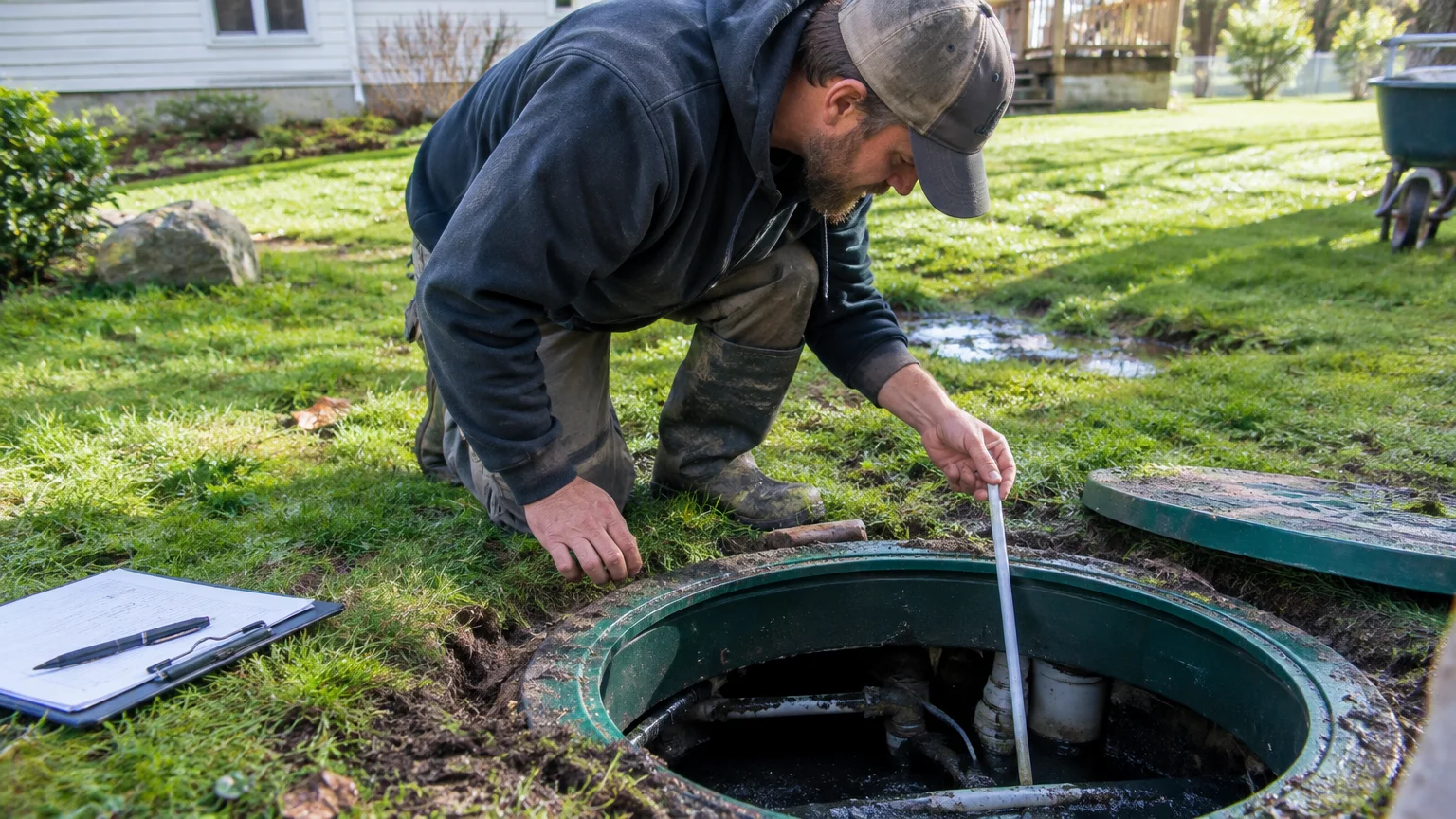
A septic professional should handle work involving the tank, buried pipes, electrical parts, sewage, or drainfield. Pumping needs proper equipment and safe waste handling. Tank inspections also need trained judgment because key parts may be hidden or damaged.
A septic tank may contain dangerous gas and harmful germs. No one should enter a tank, even when it looks empty. A professional can locate the tank, uncover access points, remove solids, and inspect important parts. This avoids unsafe guesses.
Why pumping, tank inspections, and repairs require trained help
Septic pumping services may include checks of baffles, filters, lids, and the area near the tank. Baffles help guide wastewater through the tank. The exact work depends on the system design and condition.
Repairs may involve pipes, pumps, controls, distribution parts, or the drainfield. These tasks are not safe for casual DIY work. Digging can also be risky. A buried tank or pipe may sit near roots, utility lines, or unstable soil.
A trained provider can plan the work and use the right tools. The provider can also manage wastewater more safely. Septic Tank Pumping Rogers can help property owners understand when pumping, repair, or emergency pumping may be needed.
What property owners should do before scheduling service
Gather service records before making an appointment. Write down recent symptoms, such as slow drains, sewage smells, wet grass, standing water, or toilet backups. Also note any recent plumbing work, additions, or changes in household use.
Keep the access area clear. Keep pets and children away from work areas. Move parked vehicles or stored items when equipment needs access. Clear information helps the provider plan the visit and find the system faster.
How do you care for a septic system between pump-outs?
Between pump-outs, control what enters the system, manage water use, and protect the drainfield. These steps help the tank work as designed. They do not replace pumping or a professional inspection.
Repair dripping faucets, running toilets, and leaking supply lines. Keep grease, wipes, and chemicals out of drains. Spread laundry, showers, and dishwasher use across several days. Keep tank lids secure and make access points easy to find.
Watch the yard for odors, soggy soil, or unusual green growth. Keep heavy vehicles, buildings, and stored items off the drainfield. These habits can help protect the system and the property.
How products and waste affect septic performance
Products marked septic-safe still need careful use. They do not make a system able to accept paint, solvents, grease, or harsh chemicals. Follow local waste rules for these materials. Do not pour them into a sink or toilet.
Wipes may not break down like toilet paper, even when a package calls them flushable. Keep medicine out of household drains. Too much grease, solid waste, or chemicals can affect flow through the tank and drainfield. Simple waste choices help protect the natural treatment process.
How landscaping, vehicles, and construction affect the system
Roots can enter damaged pipes and affect flow. Deep digging can damage tanks, pipes, and distribution lines. Heavy vehicles may compact soil above a drainfield. Compacted soil cannot accept wastewater as well.
Before adding a driveway, shed, pool, fence, or patio, confirm where septic parts sit. Local approval or a site review may be needed. Each property has a different layout, so a site plan is safer than a guess.
How often should a septic tank be pumped and inspected?
A septic tank should be pumped and inspected based on tank size, household use, wastewater strength, and the solids produced. No single schedule fits every property. A professional can review records and suggest a plan for that system.
A smaller tank may fill faster than a larger tank. More residents, guests, a garbage disposal, and high water use can add solids or liquid faster. Older systems may need closer checks when parts wear or records are missing.
A part-time home still needs care. Long periods of low use do not remove sludge from the tank. Rentals, vacation homes, businesses, and large households may need plans that match changing use.
Pump-out timing should follow inspection findings and local rules. Keep a service record that shows when work happened and what the provider found. This history helps future providers give better advice. It also helps buyers understand the system.
Signs that the system needs attention sooner
Do not wait for the next planned visit when warning signs appear. Common signs include:
- Slow drains throughout the home instead of one blocked fixture.
- Sewage odors inside the home or near the tank and drainfield.
- Wet spots, standing water, or unusually green grass over the system.
- Gurgling toilets or wastewater backing up into sinks and tubs.
- Sewage surfacing near the tank, cleanout, or drainfield.
These signs can have more than one cause. A professional can test the system and find the source. Rogers homeowners should act quickly when wastewater reaches the yard. People and pets should avoid contact with it.
A warning sign may come from a full tank, blocked pipe, leaking fixture, damaged outlet, or drainfield problem. Covering the area or guessing at a repair can delay the right help.
What can go wrong when septic maintenance is neglected?
Neglected maintenance can cause backups, odors, sewage exposure, pipe damage, and drainfield failure. Small problems often become harder to fix when wastewater keeps entering the system. Early action gives the owner more choices.
Excess solids can leave the tank and reach the drainfield. Grease can coat pipes and reduce flow. Wipes may not break down like toilet paper. Harsh chemicals can affect natural treatment or damage system parts. Too much water can also overwhelm the system.
A leaking toilet may send a steady flow into the tank. This can place stress on the system without being easy to notice. Regular checks help find these problems sooner.
How water, weather, and soil conditions add strain
Heavy rain can add water to a damaged system or flood the drainfield. Compacted soil, blocked pipes, and broken distribution parts may stop wastewater from spreading correctly. A slow drain may seem minor, but several slow drains can point to a full tank or blocked main line.
A damp patch may signal wastewater near the surface. Odors may show that gas or sewage is escaping where it should not. These signs should be checked instead of covered with soil, chemicals, or landscaping.
Keep people and pets away from sewage and standing wastewater. Do not cover the area with soil or treat it with chemicals. Those actions can hide the problem and make inspection harder.
A professional can find whether the cause is inside the home, at the tank, or in the drainfield. The next step may involve pumping, cleaning, repair, testing, or another inspection. Septic tank replacement may be considered only when damage or site conditions make repair unsuitable.
When should you call a septic tank pumping professional?
Call a septic tank pumping professional when the tank is due for service, records are missing, or warning signs appear. Urgent signs include sewage backup, wastewater on the ground, strong sewage odors, and repeated drain problems.
A backup inside the home needs prompt attention. So does sewage pooling near a walkway, ditch, home, or water source. Children and pets should stay away. Limit water use until a professional gives direction.
Some problems may need emergency pumping or 24/7 service. A provider can decide how quickly the system needs attention after learning about the symptoms. Do not wait when sewage is entering the home or yard.
How to prepare for a professional evaluation and next steps
Do not open the tank alone or use drain chemicals to force flow. Chemicals may harm people, pipes, or septic parts. They may also make later work more dangerous.
Before service, locate records and clear access. Write down recent symptoms. Tell the provider about the number of residents, recent guests, laundry patterns, and remodeling. A clear history helps compare current conditions with past service notes.
The provider may inspect the tank, outlet parts, filters, pipes, pumps, and drainfield. The next step may be pumping, cleaning, repair, testing, or a follow-up inspection. The final scope and amount depend on system size, access, parts, damage, and urgency. A written quote confirms the work and expected scope before it starts.
Frequently Asked Questions
What is a septic system? A septic system is an underground wastewater system for properties without public sewer service. It usually has a tank and a drainfield. The tank separates solids from liquid. The drainfield lets treated wastewater move through soil. Proper care for a septic system helps these parts work together.
How far does a septic tank need to be from a house? The distance depends on local rules, site conditions, and system design. Do not rely on a general online answer. Local health departments, permits, site plans, and qualified professionals can confirm the approved location in Arkansas.
How deep should a septic tank be? A tank should allow safe pipe flow and proper soil cover. The exact depth varies by design and site. Access lids should remain reachable. A professional can locate the tank and confirm its depth without unsafe digging.
Who performs a perc test? A qualified soil evaluator, engineer, or approved professional usually performs a percolation, or perc, test. The test checks how quickly soil absorbs water. Local rules decide who may perform it and when it is needed.
Who installs septic tanks near me? A licensed or locally approved septic installer usually installs tanks and related parts. The right provider depends on local rules, system design, and site conditions. Rogers property owners should check permits, qualifications, insurance, and past service records before choosing an installer.
Key takeaways
- Daily habits matter: Keep grease, wipes, chemicals, and excess water out.
- Homeowners can check: Watch leaks, water use, records, odors, drains, and yard changes.
- Professionals handle tank work: Pumping, inspections, repairs, and digging need trained help.
- Protect the drainfield: Keep vehicles, buildings, deep roots, and construction away.
- Act on warning signs: Backups, sewage odors, wet soil, and standing water need quick help.
Conclusion
Good septic care starts with small household choices and regular service. Owners can protect the system by managing water, keeping harmful waste out, and protecting the tank and drainfield. Homeowners do not need a professional for leak checks, water-use monitoring, recordkeeping, or keeping the area clear.
Professional septic system pumping services are still important. Solids, hidden damage, and unsafe conditions cannot be judged safely from the surface. The best plan considers tank size, household use, site layout, access, soil, system age, and local rules.
When warning signs appear, a provider can find whether the cause is a plumbing issue, full tank, damaged part, or drainfield concern. A written quote confirms the recommended work and amount before service begins.
Septic Tank Pumping Rogers helps property owners with septic care and nearby communities. Contact us to discuss your septic pumping or maintenance concern.