The phrase what are septic tank systems means private wastewater systems that collect, settle, and treat water from a property. A septic tank holds wastewater while solids sink and lighter waste floats. Liquid then moves to a drainfield, where soil gives it more treatment before it returns to the ground.
Table of Contents
- What is a septic tank and what does it do?
- What are the main parts of a septic system?
- How does a septic tank separate and treat wastewater?
- How do the septic tank and drainfield work together?
- What septic terms should property owners know?
- What are the most common septic system misconceptions?
- How can you protect and maintain a septic system?
- Frequently Asked Questions
What is a septic tank and what does it do?
A septic tank is a buried, watertight container. It receives wastewater from a home or other building. The tank holds the water long enough for heavy solids to sink and light materials to rise. It is the first step in a larger septic system.
The septic system’s basic purpose
A septic system treats wastewater when a public sewer line is not available. It can serve homes, some businesses, and other buildings with the right land and approved design. The system helps protect people and the ground by holding waste and sending treated liquid through the soil.
Wastewater comes from toilets, sinks, showers, tubs, washing machines, and dishwashers. It can contain waste, soap, food bits, grease, and other materials. A working system handles this flow without letting untreated waste spread across the ground.
Rules can differ by state, county, and property. Property owners in Rogers should check local rules before adding rooms, changing plumbing, or building near a septic area. Septic Tank Pumping Rogers can help Rogers property owners understand when pumping, inspection, or a closer system review may be needed.
How wastewater enters and leaves the tank
The main sewer pipe carries wastewater from the building to the tank. An inlet pipe guides the flow inside. The water slows down, allowing solids to settle and floating material to rise.
Clearer liquid in the middle leaves through an outlet pipe. It then moves toward the drainfield. Baffles or other outlet parts help keep scum and sludge inside the tank. If a baffle is damaged or missing, solids may reach the drainfield and cause problems.
What are the main parts of a septic system?
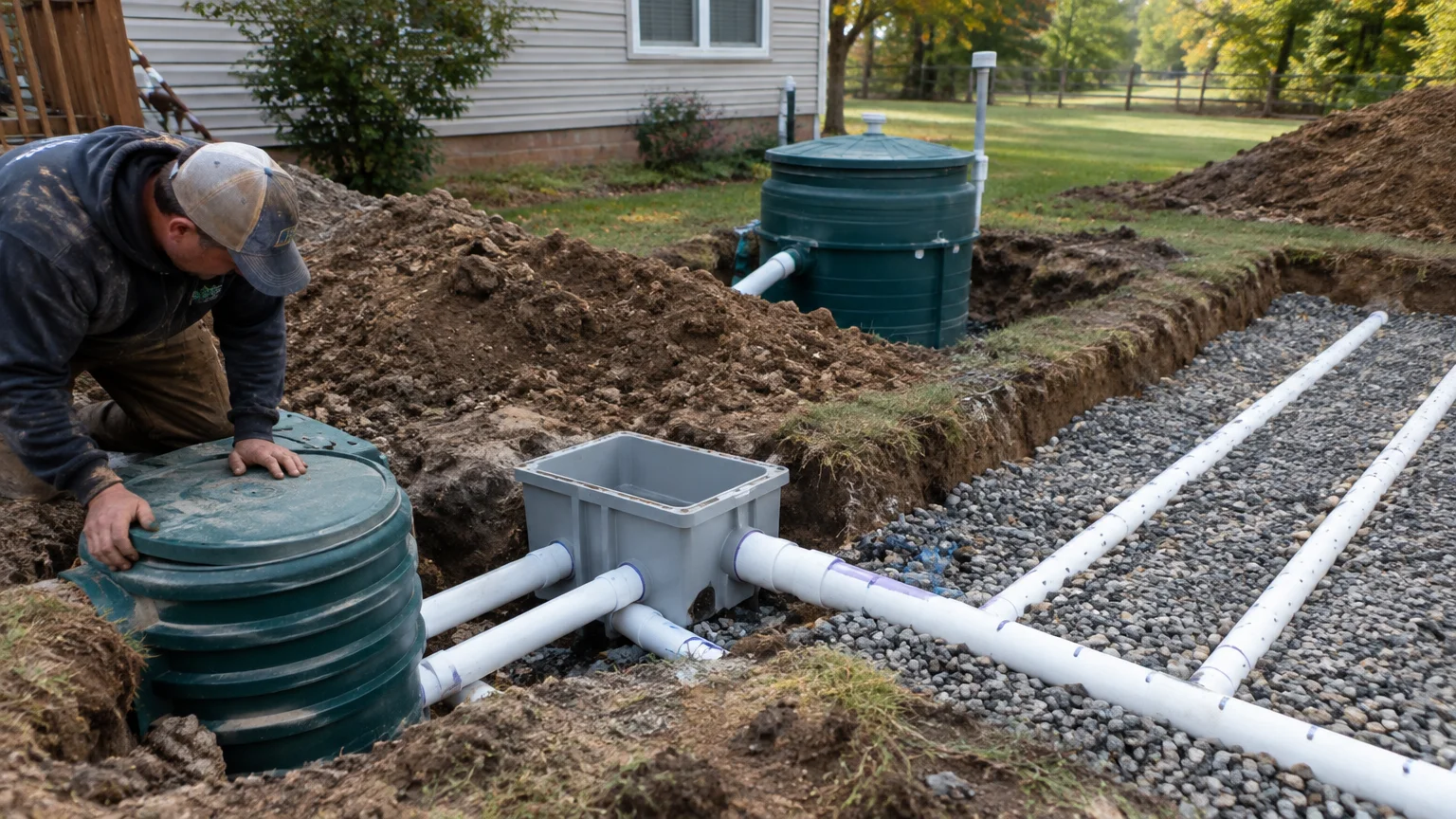
The main parts are the tank, pipes, lids, inlet and outlet fittings, drainfield, and soil. Some systems also have a pump or distribution box. Each part has its own job, so one damaged part can affect the whole system.
Tank, inlet, outlet, and access lids
Tanks are often made from concrete, fiberglass, or approved plastic. Tank size and design depend on the property, local rules, soil, and expected water use. The inlet pipe brings wastewater from the building. The outlet pipe sends liquid toward the drainfield.
Access lids let trained workers inspect the tank and remove built-up solids. Some tanks have more than one lid. A riser is a pipe that brings an access opening closer to the ground. Secure lids are important because an open or damaged lid can cause a serious safety risk.
A distribution box may sit between the tank and drainfield. It spreads liquid across several drainfield lines. Some systems use a pump tank and pump when the drainfield is higher than the tank or needs controlled doses of wastewater.
Drainfield, soil, and distribution components
The drainfield receives liquid from the tank. It may have trenches, chambers, or other approved structures. Liquid moves through small openings and the bottom of the field into the soil.
Soil acts as a natural filter and treatment layer. Good soil lets water move at a safe speed while holding back many harmful materials. Soil that is too tight, wet, shallow, or poorly suited may not treat wastewater well.
A percolation test, often called a perc test, checks how fast water moves through soil. A qualified soil professional, engineer, health department, or approved site evaluator may perform or oversee the test. Local rules decide who may approve the result.
How does a septic tank separate and treat wastewater?
A septic tank separates wastewater into layers while it rests. Heavy material becomes sludge at the bottom. Grease and other light material become scum at the top. The middle liquid, called effluent, moves toward the drainfield for more treatment.
The roles of scum, effluent, and sludge
Sludge is heavy solid material that settles on the tank floor. Scum is the floating layer near the top. Effluent is the liquid between those layers. These words help workers explain what they find during an inspection or pumping visit.
Baffles guide the flow and help keep scum and sludge inside the tank. Some newer tanks also have outlet filters. An effluent filter catches some solids before they enter the drainfield. It still needs proper cleaning and does not replace regular tank care.
Solids build up because bacteria cannot break down everything that enters the tank. Septic pumping removes built-up sludge and scum. The right schedule depends on tank size, household size, water use, waste habits, and the amount of solids present.
What happens during natural wastewater treatment
Bacteria inside the tank break down part of the organic waste. This lowers some waste, but it does not remove every germ, chemical, or nutrient. A septic tank is not a complete wastewater treatment plant.
After effluent leaves the tank, soil provides another treatment step. Soil can filter and hold some contaminants. Natural soil processes also help reduce waste. This works only when the drainfield is well designed, not overloaded, and protected from damage.
Too much water can move waste through the system too quickly. Harsh chemicals, grease, wipes, and other wrong items can also harm the system. Good daily habits help the tank and drainfield work as planned.
How do the septic tank and drainfield work together?
The septic tank and drainfield are one connected treatment system. The tank removes much of the solid waste first. The drainfield receives the liquid and lets the soil complete more treatment. Neither part can safely replace the other.
Wastewater flow from the home to the soil
For people asking “what are septic tank” systems, wastewater first leaves the home through the inlet pipe. Inside the tank, scum rises, sludge settles, and effluent stays between them. The effluent then passes through the outlet and distribution parts into the drainfield soil.
A simple flow path is home plumbing, inlet pipe, septic tank, outlet pipe, distribution box or pump, drainfield lines, and soil. Systems with pumps or advanced treatment units may have a different layout. A licensed professional or local authority can confirm the layout for a certain property.
Property owners should keep records of the tank location, drainfield location, pumping, inspections, repairs, and permits. These records help future owners, tenants, and workers understand the system. They also help prevent digging or building in protected areas.
Why soil conditions affect system performance
Drainfield soil must accept liquid at a safe rate. If water moves too slowly, the field may stay wet. If water moves too quickly through some soils, treatment may be weaker. A high water table, flooding, packed soil, or poor grading can also hurt system performance.
Heavy vehicles and structures can crush pipes or pack down the soil. Pools, sheds, driveways, and additions should stay away from the drainfield unless local officials approve the plan. Grass is often a good cover because it helps control erosion without deep roots.
What septic terms should property owners know?
Basic septic terms make inspection reports and service talks easier to understand. These terms describe system parts, wastewater layers, and care tasks. Clear words help owners make good choices without guessing.
Effluent, biomat, baffle, and riser explained
Effluent is the liquid that leaves the septic tank for the drainfield. A biomat is a thin layer that forms where effluent enters the soil. It can help treatment, but a thick or blocked biomat may slow the flow.
A baffle directs wastewater and helps keep scum and sludge in the tank. A riser brings an access opening closer to the ground. These parts can make inspection and pumping easier, but they must stay secure and protected.
A drainfield is the soil area that receives tank effluent. A distribution box spreads flow among drainfield lines. A pump tank stores and moves effluent in systems that need lifting or timed dosing.
Pumping, inspection, maintenance, and repairs compared
Pumping removes sludge and scum from the tank. Inspection checks the tank, pipes, levels, baffles, filters, drainfield signs, and other parts. An inspection may be needed during a property sale, before a purchase, after a problem, or during routine care.
Maintenance includes safe water use, cleaning an effluent filter when needed, protecting the drainfield, and keeping records. Repairs fix a damaged, blocked, broken, or failing part. Replacement is a larger project that may involve a tank, drainfield, pump, or full system design. Septic tank replacement is usually more involved than routine septic pumping because it may require permits, site work, and a new design.
The terms septic tank pump services and septic system pumping services often describe professional work that removes built-up solids. The exact work should be confirmed before service starts. Septic Tank Pumping Rogers can explain which visit may fit a property in the main Rogers service areas, from Downtown Rogers to Bentonville, Lowell, Cave Springs, Pea Ridge, and nearby communities.
What are the most common septic system misconceptions?
Many septic problems begin with a wrong idea. A system can work quietly for years, but quiet operation does not prove that every part is healthy. Regular maintenance matters even when toilets flush and drains empty normally.
Why a septic tank is not a complete wastewater treatment plant
A septic tank settles solids and supports early biological treatment. It does not remove every contaminant from wastewater. The drainfield and soil are needed to complete the treatment process.
Owners should not pour paint, fuel, strong chemicals, grease, or medicines down drains. They should also avoid flushing wipes, paper towels, feminine products, cat litter, and other items that do not belong in a septic system.
Another mistake is treating the tank like a trash bin. A septic tank is made for wastewater and normal toilet waste. Items that do not break down can fill the tank, block pipes, damage pumps, or reach the drainfield.
Why drains working normally does not prove the system is healthy
A system can show no indoor warning signs while solids keep building up. The drainfield may also be under stress before sewage backs up or wet spots appear. Waiting for a major failure can cause more disruption and a harder repair.
Owners should learn where the tank and drainfield are located. They should watch for slow drains, sewage odors, wet ground, bright green grass over the field, surface wastewater, or sewage backup. One sign does not prove the cause, but it does support a professional review.
People also ask how deep a septic tank should be and how far it should sit from a house. The answer depends on the design, ground level, pipes, soil, access needs, and local rules. A site plan or qualified inspection is safer than guessing.
How can you protect and maintain a septic system?
Homeowners can handle many daily habits themselves, but they should not open a tank, enter a tank, or dig into a drainfield. Septic tanks may contain toxic gases and unsafe conditions. Pumping, tank entry, major repairs, septic tank replacement, and electrical work need trained professionals.
Everyday habits that reduce strain on the system
Simple steps can reduce stress on the tank and drainfield. Spread laundry across the week, fix leaking fixtures, and keep roof or surface water away from the drainfield. Use sinks and toilets only for their intended purpose.
- Flush only human waste and toilet paper.
- Keep grease, oil, chemicals, and paint out of household drains.
- Keep vehicles, sheds, and heavy equipment off the drainfield.
- Keep records of pumping, inspections, permits, and repairs.
- Learn the tank location before landscaping or digging.
A homeowner may check for clear plumbing leaks, note odors or wet areas, and keep the area free from heavy traffic. A homeowner should not pump a tank, remove a heavy lid, enter a tank, or use a probe that could harm pipes.
Signs that professional evaluation may be needed
Professional help may be needed when wastewater backs up, drains slow across the property, odors remain outdoors, or liquid appears near the tank or drainfield. A pump alarm, very wet ground, or sudden changes after heavy rain also deserve attention. Emergency pumping may be needed when a tank is full or wastewater is backing up, but an evaluation can help find the cause.
First, limit water use if sewage is backing up. Keep people and pets away from exposed wastewater. Then arrange an evaluation with a qualified septic professional and follow local health department guidance.
Key takeaways
- A septic tank separates solids from liquid but does not finish treatment alone.
- The drainfield and soil are key parts of wastewater treatment.
- Septic pumping removes sludge and scum but does not fix every problem.
- Safe habits include protecting the drainfield and keeping harmful items out of drains.
- Septic Tank Pumping Rogers helps property owners across Rogers with septic system guidance and service options.
Frequently Asked Questions
How does a septic system work?
Wastewater flows from the building into a buried tank. Solids settle, light materials float, and liquid leaves through an outlet. The liquid enters the drainfield, where soil provides more treatment. Both the tank and drainfield must work properly.
How far does a septic tank need to be from a house?
The required distance depends on state and local rules, site conditions, pipe layout, and system design. The tank must also stay reachable for inspection and pumping. A local health department, approved plan, or qualified septic professional can confirm the right location.
Who performs a perc test?
A perc test may be performed or overseen by a qualified soil professional, engineer, health department, or approved site evaluator. The exact rule depends on the local authority. Property owners should ask the local permitting office who may conduct and approve the test.
When should a septic tank be pumped?
A tank should be pumped based on its solids level and the needs of the property. Household size, tank size, water use, and waste habits all matter. An inspection can show whether pumping is needed.
Who installs septic tanks near me?
Septic tanks are usually installed by licensed or approved septic contractors who follow an engineered plan and local permits. In Rogers, property owners can ask the local permitting authority about licensing rules. Septic Tank Pumping Rogers can also discuss the right type of professional evaluation for a property.
Conclusion
A septic system is more than a buried tank. It is a group of parts that collect wastewater, separate solids, move liquid, and use soil for added treatment. Understanding terms such as effluent, baffle, biomat, drainfield, pumping, and inspection helps property owners protect the system.
Homes and businesses in Rogers can benefit from careful water use, safe drain habits, protected soil, and clear service records. For help understanding a septic tank, planning pumping, or arranging a system evaluation, Contact us to discuss the property with Septic Tank Pumping Rogers.
If you are not sure what you are dealing with, it is worth having someone look at it before it turns into a bigger job. Get in touch with Septic Tank Pumping Rogers today and we will tell you where you stand.