The answer to how deep is a leach field depends on soil, groundwater, slope, and local rules. Many systems use shallow trenches with soil over the pipes and stone. The exact depth can vary from one property to another. Records and a professional site check give the safest answer for Rogers property owners.
A leach field is also called a drain field or septic system drain field. It receives treated wastewater from the septic tank. Soil helps filter that water before it moves into the ground.
Depth matters when you dig, plant, change drainage, repair pipes, pump the tank, or build. A field may look like an open lawn, but pipes can sit just below the surface. Septic Tank Pumping Rogers helps local property owners understand these system concerns.
Table of Contents
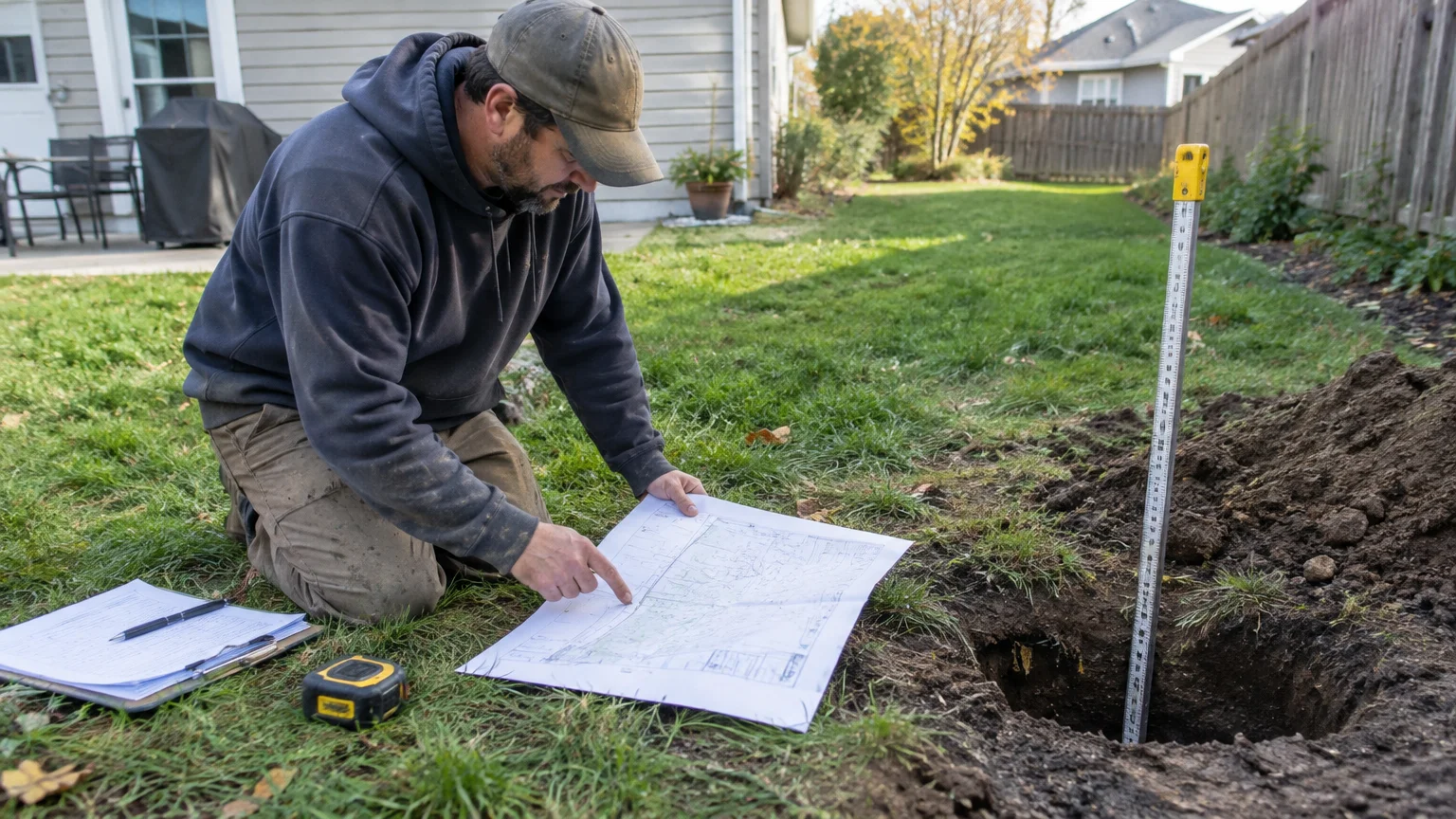
- How deep is a leach field?
- What determines how deep a leach field should be?
- How much soil cover should be over a leach field?
- Are leach fields installed at different depths?
- How can you find the depth of a leach field on your property?
- What should you avoid doing over a leach field?
- When should a professional inspect or locate a leach field?
- Frequently Asked Questions
How deep is a leach field?
A leach field is often placed in shallow trenches below the ground. Still, no single depth works for every septic system. The pipes, stone or chambers, soil cover, and natural soil layers all affect the finished depth.
The field must be deep enough to protect the pipes and let wastewater enter suitable soil. It should not be so deep that water cannot move through the soil well. Local rules and the approved site plan decide the final design.
Typical trench depth and soil cover
A common field has trenches with pipes above stone or inside chambers. Soil covers the system after installation. The lawn may look level even when the pipes follow a planned layout below it.
The distance from the lawn to the pipe differs from the distance to the trench bottom. These are two separate measurements. A permit drawing may show both the trench depth and the finished soil cover.
Why leach field depth is not one fixed number
A leach field must work with the soil below it. That soil needs enough space to receive and treat wastewater. Clay, rock, or seasonal groundwater can limit where the field can go.
Some searches use the spelling “leech field,” but “leach field” is the standard term. A drainfield may be shallow, raised, or built with another approved design. The right depth comes from a site review, not a general guess.
What determines how deep a leach field should be?
Soil and groundwater are key factors in field depth. The design must leave enough suitable soil below the dispersal area. It must also keep wastewater away from groundwater and other limits set by local health officials.
A perc test, or percolation test, measures how fast water moves through soil. A qualified septic professional or local authority may arrange this test. It is only one part of a full site review. Soil type, slope, groundwater, rock, and the planned home also matter.
Soil type, seasonal groundwater, and restrictive layers
Sandy soil may let water move quickly. Clay may drain slowly. Neither result alone decides the right depth. The system needs both good water movement and enough natural treatment.
Groundwater can rise during wet seasons. A site that seems safe during a dry visit may have less usable soil later. Dense clay or bedrock can also limit the field location and depth.
Slope, site layout, and available usable soil
Slope affects how wastewater moves through pipes. It also affects how the field is divided. A level area may allow a standard layout, while a sloped lot may need pressure dosing or a raised design.
The field must fit around the house, well, property lines, driveway, trees, and drainage areas. Setbacks vary by state and local rule. Rogers property owners should use approved plans instead of copying a nearby system.
How much soil cover should be over a leach field?
A leach field needs enough soil cover to protect its pipes and treatment area. It also needs the right soil conditions for air and water movement. The proper cover depends on the system design, local rules, and the parts installed below the surface.
Too little cover can leave pipes open to damage from weather, animals, tools, or traffic. Frost may affect shallow parts in some areas. Too much cover can reduce air movement, change drainage, add weight, and hide access points.
Balancing protection, drainage, and oxygen flow
Healthy soil has small air spaces. These spaces support the natural process that treats wastewater. Packed soil reduces those spaces and can slow water movement.
The finished ground should send rain away from the field. Gutters, downspouts, swales, and yard drains may need to direct water elsewhere. Adding soil without checking the plan can change how water reaches the system.
Why too little or too much cover can cause problems
A thin cover may leave the system open to damage. A thick cover may bury access points and make future work harder. It can also add pressure to pipes or chambers that were not made for heavy loads.
Do not use a tractor, dump truck, or similar machine to spread soil over the field without advice. Even a short trip can pack the soil or damage buried parts. Keep the surface close to the approved finished grade.
Are leach fields installed at different depths?
Yes. Leach fields can use different depths and layouts. The design depends on soil, groundwater, lot shape, wastewater flow, and local approval. A standard system is only one type of septic system drain field.
The terms shallow, raised, mound, and pressure-dosed describe designs made for different site limits. They do not mean one system is always better. Each system must match the property and its care plan.
Conventional trenches, beds, and shallow systems
A trench system places pipes or chambers in separate narrow runs. A bed system uses one wider area. Both spread wastewater through prepared soil, but their shape and flow pattern differ.
A shallow system may be used when suitable soil is close to the surface. It may need careful grading and protection from traffic. Access points can be easier to find, but the field is still not safe to dig into.
Raised, mound, pressure-dosed, and alternative systems
A raised or mound system adds suitable soil above the natural ground. This can help when natural soil is too shallow or groundwater is too close. The field may appear as a gentle rise in the yard.
A pressure-dosed system uses a pump to send wastewater in controlled doses. Other approved systems may use treatment units, filters, or added parts. Their depth and care needs can differ from a basic gravity system. Septic Tank Pumping Rogers can help Rogers property owners understand which system may be on the site before work starts.
How can you find the depth of a leach field on your property?
The safest way to find field depth is to start with records and then check the site. A permit, as-built drawing, or septic inspection report may show the tank, pipes, field, and finished grades. Records are safer than guessing from grass color or surface shape.
Collect documents before digging. Useful records may come from the county health department, building office, former owner, septic installer, or property manager. Rules for getting these records vary across the country.
Checking permits, as-built drawings, and property records
An as-built drawing shows what was installed and where it was placed. It may show trench lengths, elevations, pipe locations, tank size, and distances from fixed points. Older drawings may be less exact after landscaping or remodeling.
Compare the drawing with the current property. Additions, patios, driveways, fences, and grading may have changed the yard. If no plan can be found, a local septic professional may use safe locating methods to trace the system.
Using inspection access points and careful surface clues
Tank lids, risers, cleanouts, and distribution boxes can give helpful clues. A distribution box sends wastewater into separate field lines. It may sit between the tank and the field.
Other clues include a shallow mound, greener grass, uneven settling, or cleanouts in a line. These clues do not prove the depth or location. Never probe with a metal rod or dig blindly near buried pipes. Before landscaping or building, have the field marked by someone who knows septic layouts.
What should you avoid doing over a leach field?
Keep a leach field open, lightly used, and free from extra water. Grass or another approved shallow cover is usually safest. Keep vehicles, buildings, pools, sheds, and heavy loads away from the field.
Protect the field from grade changes and deep roots. A small yard project can hurt the system by adding weight, blocking air, or sending stormwater into the trenches. Check the permit before changing the ground.
Landscaping, structures, vehicles, and heavy equipment
Deep-rooted trees and large shrubs can grow into pipes or chambers. Concrete, asphalt, and patios can block air and make repairs harder. Storage sheds, play equipment, and parked vehicles can pack the soil.
Homeowners can usually mow with light equipment and remove invasive plants themselves. Keep access lids visible. Digging, grading, pipe repair, and system changes need more care and should be handled by a qualified professional.
Drainage, irrigation, and deep-rooted plants
Sprinklers should not soak the field. Roof water should not drain over it. French drains, retaining walls, and landscape berms can change how water moves through the soil.
Avoid planting trees near the field unless a septic professional approves the choice. Do not add or remove soil without checking the plan. Deep mulch can also hide warning signs and change the field’s working conditions.
When should a professional inspect or locate a leach field?
A professional should locate or inspect the field before excavation, construction, grading, major planting, or a property transfer. Help is also wise when you notice sewage odors, wet spots, slow drains, wastewater, or unusually green grass over the field.
A septic professional can locate key parts, review access points, check distribution, and look for signs of saturation or damage. An inspection does not replace local permits or health records. It adds a field check to the information already available.
Warning signs of depth, drainage, or distribution problems
Watch for these signs:
- Wet soil that stays damp while nearby ground is dry
- Sewage odors near the tank or drain field
- Slow drains throughout the building
- Wastewater surfacing or pooling in the yard
- Grass that grows much greener over one field area
- Soil settling, erosion, or exposed pipes
One sign does not prove the field has failed. Rain, blocked plumbing, a full tank, or a damaged pipe can cause similar signs. A prompt inspection can help separate a small issue from a larger drainfield problem.
What to confirm before repairs, construction, or septic pumping
Before work begins, confirm the tank location, field edges, pipe direction, access points, and approved grades. Share records about past repairs, additions, pumps, alarms, and unusual water use.
Septic tank pumping removes solids from the tank, but it does not fix a damaged drain field. Pumping can still be an important part of system care. The right schedule depends on the tank design, household use, and professional advice. Septic Tank Pumping Rogers serves property owners across the main Rogers area, from Downtown Rogers to Bentonville, Lowell, Cave Springs, Pea Ridge, and nearby communities.
Frequently Asked Questions
How deep should a septic tank be?
A septic tank may be buried at different depths based on its location, soil cover, access needs, and local approval. The tank should stay accessible for inspection and pumping. Use the permit or as-built drawing instead of guessing from the yard. A riser may keep the lid closer to the surface.
What is a septic system?
A septic system treats wastewater on the property where it is produced. It usually includes a tank, pipes, and a leach field. Solids settle in the tank, while liquid moves to the drain field for soil treatment. Pumps, filters, alarms, and treatment units may be added for some designs.
Who performs a perc test?
A qualified soil professional, septic designer, engineer, or other approved specialist may perform or arrange a perc test. The exact rule depends on the state and county. The local health department can explain who may do the work. The test checks soil drainage, but it is not the same as a full septic inspection.
How far does a septic tank need to be from a house?
The required distance depends on state and local rules, site conditions, and the approved septic plan. Setbacks may also apply to wells, property lines, streams, driveways, and buildings. Check with the local permit office or ask a qualified professional to review the site before moving or installing a tank.
How do you spell cesspool?
The standard spelling is cesspool. A cesspool is not the same as a modern septic tank and approved leach field. It is an older underground wastewater structure that may not meet current rules. Ask the local authority about the system type before planning repairs or changes.
Key Takeaways
- Leach field depth depends on soil, groundwater, slope, and system design.
- Pipe depth and trench depth are two different measurements.
- Permits and as-built drawings are the best places to start.
- Keep vehicles, buildings, deep roots, and extra water away from the field.
- Have the field located before digging, building, or changing grades.
Conclusion
The question “how deep is a leach field” has no single answer for every property. A standard field may be shallow, while a mound or pressure-dosed system may use another layout. Soil, groundwater, local rules, and the approved design decide the proper placement.
Start by finding permits, drawings, tank access points, and old inspection records. You can usually mow the area with light equipment and keep heavy loads away yourself. Digging, grading, locating buried lines, and checking wet areas need careful professional help.
Septic Tank Pumping Rogers helps property owners understand septic system needs throughout Rogers. Contact us to arrange help locating, checking, or maintaining a leach field before your next property project.