The answer to how deep is the septic tank depends on the land, tank design, soil, and pipe layout. Many tanks sit below the soil surface, but the lid may be shallow or deeply buried. Property records, careful locating, and a septic professional can help confirm the depth without harming the system.
A buried septic tank can concern a homeowner, tenant, buyer, or investor. A lid may be easy to see, or it may sit under grass, gravel, or landscaping. Finding it matters because safe access supports pumping, inspections, repairs, and future property records.
Septic Tank Pumping Rogers helps property owners understand septic tank access and care. The right answer comes from the approved site plan and the conditions on that property. It should not come from a guess based on another home.
Table of Contents
- How deep is a septic tank usually buried?
- What determines how deep a septic tank is installed?
- How can you find the depth of your septic tank?
- How far below ground should septic tank lids be?
- Does septic tank depth affect pumping and maintenance?
- What setbacks apply to a septic tank and drainfield?
- What should you do if you cannot find or safely access the tank?
- Frequently Asked Questions
- Key takeaways
- Conclusion
How deep is a septic tank usually buried?
A septic tank is often buried below the surface, but there is no single depth for every property. Some tanks sit close to the ground. Others have several feet of soil above them. The inlet pipe, outlet pipe, slope, soil, tank shape, and local rules all affect the final position.
Typical tank depths for common septic system designs
Many home septic tanks are buried to protect the tank and pipes from normal yard use. Soil cover can also help protect the system from weather and light yard work. Even so, a tank should not be assumed to have a standard burial depth.
Some tanks have lids near the surface. Other lids sit below the finished grade, especially on sloped lots or properties with raised drainfields. Concrete and plastic tanks may also have different shapes and access points. The tank itself may sit deeper than the lid suggests.
The most helpful measurement is from the current ground surface to each access lid. A tank may have two or more lids. These lids may not sit at the same depth. A service worker may check the inlet, outlet, and center access points during a visit.
Why the tank lid may be closer to or farther from the surface
Landscaping can change the depth that you see over time. Soil may be added during grading. Erosion may uncover part of a lid. Driveways, patios, gardens, and raised beds can also hide access points or place extra weight above them.
Do not drive heavy equipment over a suspected tank. The cover may be strong, but the soil and access parts may not support vehicle weight. Keeping lids clear and marked makes future septic tank pumping safer and easier.
What determines how deep a septic tank is installed?
Septic tank depth depends on the home, tank, drainfield, and land slope. The installer must create a safe flow path for wastewater. The system must also protect nearby wells and water sources. The approved site plan is the best record of the design.
Soil, slope, drainage, and local site conditions
A sloped property may let wastewater flow toward the tank by gravity. A flat property may need a pump part. Soil type also matters. Wet, rocky, sandy, or packed soil can affect construction and drainage.
The water table is another concern. A tank and drainfield must be placed so the soil can treat wastewater safely. Local health offices may review soil tests, groundwater, and the planned system before work begins.
Drainage around the tank matters too. Rain should flow away from lids and risers. Standing water can make access unsafe. It may also point to a grading or drainage problem.
Tank size, inlet and outlet pipes, and system layout
Tank size changes the shape and footprint of the system. It does not create one standard burial depth. The inlet pipe must connect to the building sewer. The outlet pipe must lead toward the drainfield. These pipe heights often guide the tank position.
A septic system is a group of parts that collects, settles, and treats household wastewater. The tank holds wastewater while solids settle. Liquid then moves toward the drainfield. The drainfield gives the liquid more treatment in the soil.
The number of tanks, pump tanks, filters, and distribution boxes can change the layout. Digging in one place may miss the main tank. It may also damage a connected line. A site plan is safer than guesswork.
How can you find the depth of your septic tank?
The safest way to find septic tank depth is to check records first. Next, locate the tank without force. Then measure the access points with care. Avoid blind digging near pipes, electrical parts, and tank lids. A professional can help when records are missing or unclear.
Checking property records, installation plans, and access points
Start with closing papers, permit files, inspection reports, and septic plans. Local health or environmental offices may keep approved records. Previous owners, landlords, contractors, and service records may also show the tank location.
The building sewer can provide a useful clue. It usually leaves the home and travels toward the tank. The route may change around additions, driveways, or other buildings. A cleanout may help, but it does not prove the tank location.
A professional may use a probe, electronic locator, or another safe method. The method should match the soil, surface, and system design. The goal is to find the lid without cracking it or damaging a pipe or drainfield.
Safe ways to locate buried lids without damaging the system
Some simple upkeep is safe for a homeowner. You can trim grass, clear loose debris, record surface markers, and keep vehicles away from the suspected tank. These steps help without opening the tank or digging deeply.
Stop if the soil becomes unstable. Stop if a lid looks damaged or if you suspect a buried cable or pipe. Septic gases can be dangerous. An open tank also creates a fall risk. Never enter a tank or lean over an open access point.
After finding the depth, record it with photos and measurements. A simple yard sketch can help too. This information helps tenants, buyers, future owners, workers, and emergency service providers find the system later.
How far below ground should septic tank lids be?
Septic tank lids should be secure, stable, and reachable for inspection and pumping. Their best position depends on the tank design and local rules. A lid buried too deeply can make care harder. An exposed or damaged lid can create a safety risk.
Why accessible lids matter for inspections and pumping
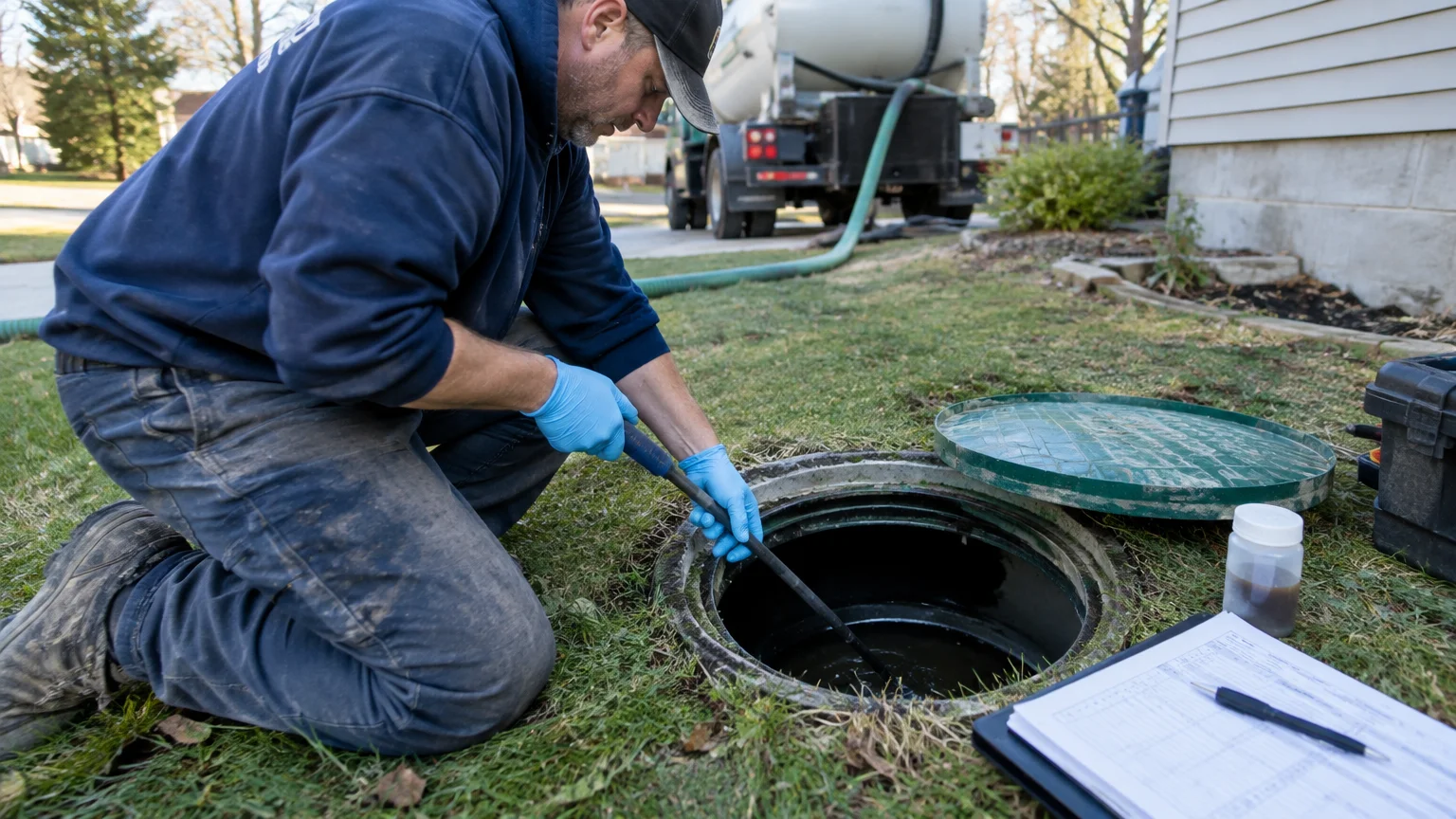
Pumping a septic system requires safe access to the tank. A worker may need to open more than one lid. This allows the worker to remove solids and check key parts. One small opening may not give a clear view of the tank.
Accessible lids also help with care between pumping visits. Filters, baffles, alarms, and pipes may need checks. Known and protected access points reduce digging and yard damage during service.
The soil around each lid should stay firm and level. Avoid plants with deep roots directly above the tank. Keep records after adding soil, paving, or changing the yard surface.
When risers can improve access to a deeply buried tank
A riser is a tube that extends from a tank lid toward the ground surface. A properly fitted riser can reduce future digging. It can also make inspections easier. The riser still needs a sealed cover that can support its intended use.
A septic professional should choose the riser and check that it fits the tank. Local approval may be needed. Poor work can let rain enter the tank. It may also let gases escape or create a weak cover that is unsafe for people and pets.
Does septic tank depth affect pumping and maintenance?
Yes. Depth can affect how a worker reaches the lids, places equipment, protects the yard, and checks the system. Depth alone does not show that a system is failing. Difficult access does make planning more important.
How depth changes access, equipment setup, and service planning
A shallow tank may be easier to locate. Its lids still need safe clearance. A deeply buried tank may need careful digging or a riser before service. Soil, slope, driveways, and nearby buildings can also affect access.
Tell the service provider about the tank location and surface conditions. Mention recent grading, flooding, construction, landscaping, or home changes. These details help the provider prepare and avoid damage.
Regular septic pumping removes settled solids before they fill too much of the tank. The right schedule depends on household size, tank capacity, water use, and the solids found during service. A local professional can help create a schedule based on the actual system.
Signs that buried or difficult-to-access lids need attention
Several signs suggest that the access setup needs a closer look:
- The tank cannot be found using plans or safe surface clues.
- Soil has covered a lid after grading or landscaping work.
- A lid is cracked, loose, missing, or surrounded by soft ground.
- Rainwater collects around the access point after storms.
- A contractor plans to pave, build, or plant near the tank.
These signs do not always mean the tank has failed. They do mean you should avoid guessing. Arrange a careful review before digging or changing the yard. Septic Tank Pumping Rogers can help Rogers homeowners gather useful information before septic system pumping.
What setbacks apply to a septic tank and drainfield?
Setbacks are required spaces between a septic system and nearby features. These may include buildings, wells, property lines, water, and drainage areas. Exact rules vary by state, county, and local health office. The approved plan and current local rules control placement.
Common separation points from buildings, wells, property lines, and water
A septic tank and drainfield may need space from homes, sheds, wells, streams, ponds, wetlands, property lines, and steep slopes. Roads, pools, paved areas, and buried utilities may also affect the layout.
The tank and drainfield may not follow the same setback rules. A tank may sit closer to a building than the drainfield. A well may need more space from the treatment area. A professional or local permitting office can explain each rule.
A perc test is a soil test that checks how quickly water moves through soil. It may be part of a septic review or new system approval. Local health staff, soil professionals, or site evaluators may oversee the test.
Why local regulations and the approved site plan control placement
Do not move a tank, add a drainfield, or build over a system based only on a neighbor's layout. Soil, lot size, water features, and old permits can differ. A plan for one property may not work on another.
Keep the permit, site plan, tank location, and service notes together. Before buying or improving a property, ask who inspected the system. Also check whether the records match what you can see in the yard.
Septic Tank Pumping Rogers serves property owners and nearby communities. Local rules still control the work. The proper authority should confirm current setbacks before construction, grading, or system changes.
What should you do if you cannot find or safely access the tank?
Stop digging when the location is uncertain or the ground is unsafe. Stop if a lid will not open without force. A qualified septic professional can locate the tank and check its access points. Guessing can damage the system or create a fall or gas hazard.
When to stop digging and contact a septic professional
A homeowner may check records and clear loose surface debris. Do not enter a tank, break a lid, cut unknown pipes, or use heavy equipment over a suspected tank. Strong odors, standing wastewater, unstable soil, or a damaged cover require extra care.
Professional help is important before selling, renting, remodeling, grading, paving, or landscaping. The provider may locate the tank and drainfield. They may measure access depth, inspect visible parts, and note repairs that need follow-up.
A septic problem may not first look like an indoor plumbing problem. Slow drains, wet patches, strong odors, sewage backup, or green growth near the drainfield can signal trouble. Do not cover these signs with more soil.
What to document for future owners, tenants, and maintenance visits
A useful record should include the tank location, access depth, lid condition, riser details, drainfield area, permit information, and service dates. Photos should show nearby fixed features, such as a home corner, driveway, fence, or utility marker.
Also record repairs, added soil, flooding, landscaping changes, and known setbacks. Tenants should report access problems or wastewater concerns to the owner. Buyers and investors should request records before making property decisions.
When the tank is hard to find, careful help can protect both the yard and system. Use Contact us to arrange septic tank help from Septic Tank Pumping Rogers.
Frequently Asked Questions
How deep should a septic tank be?
There is no single depth for every septic tank. The tank may be shallow or several feet below the soil. The building sewer, slope, soil, tank design, and local rules all affect the depth. The approved site plan and a careful lid measurement provide the best answer.
How far is a septic tank from a house?
The distance between a house and tank depends on local setbacks, the sewer route, lot shape, and system design. The drainfield may have different rules. Check the approved plan before building, grading, or moving any part of the system.
Who performs a perc test?
A local health office, soil professional, engineer, or approved evaluator may perform or oversee a perc test. The exact role depends on the state and county. Ask the local permitting office who is approved for that property.
How does a septic system work?
A septic system collects wastewater from a building in a buried tank. Heavy solids settle, and lighter material rises. Liquid flows toward the drainfield. Soil gives the liquid more treatment as it moves through the ground. Inspections and pumping help keep solids from reaching the drainfield.
Can a homeowner uncover a septic tank?
A homeowner can check records, clear loose debris, and make safe surface observations. Deep digging is risky when the location is uncertain. A professional should locate buried lids and assess damaged covers. No one should enter a septic tank or lean over an open one.
Key takeaways
- Septic tank depth depends on land, pipes, tank design, and the approved plan.
- Tank lids should stay secure, reachable, and protected from vehicle weight.
- Records and careful locating are safer than blind digging.
- Risers may improve access when properly installed and sealed.
- Setbacks vary by local rules and may differ for tanks and drainfields.
Conclusion
The answer to how deep is the septic tank differs from one property to another. Soil, slope, wastewater pipes, tank design, drainage, and local rules shape the final installation. A visible lid does not always show the full tank depth. A hidden lid does not prove the system is damaged.
The best plan is simple. Check records, protect the suspected area, and write down what you learn. Stop when digging becomes unsafe or uncertain. Septic Tank Pumping Rogers can help property owners prepare for septic inspections, pumping, and access planning.
Rogers property owners can get help with the next step. Use Septic Tank Pumping Rogers to get in touch and arrange the next step.
If you are not sure what you are dealing with, it is worth having someone look at it before it turns into a bigger job. Get in touch with Septic Tank Pumping Rogers today and we will tell you where you stand.