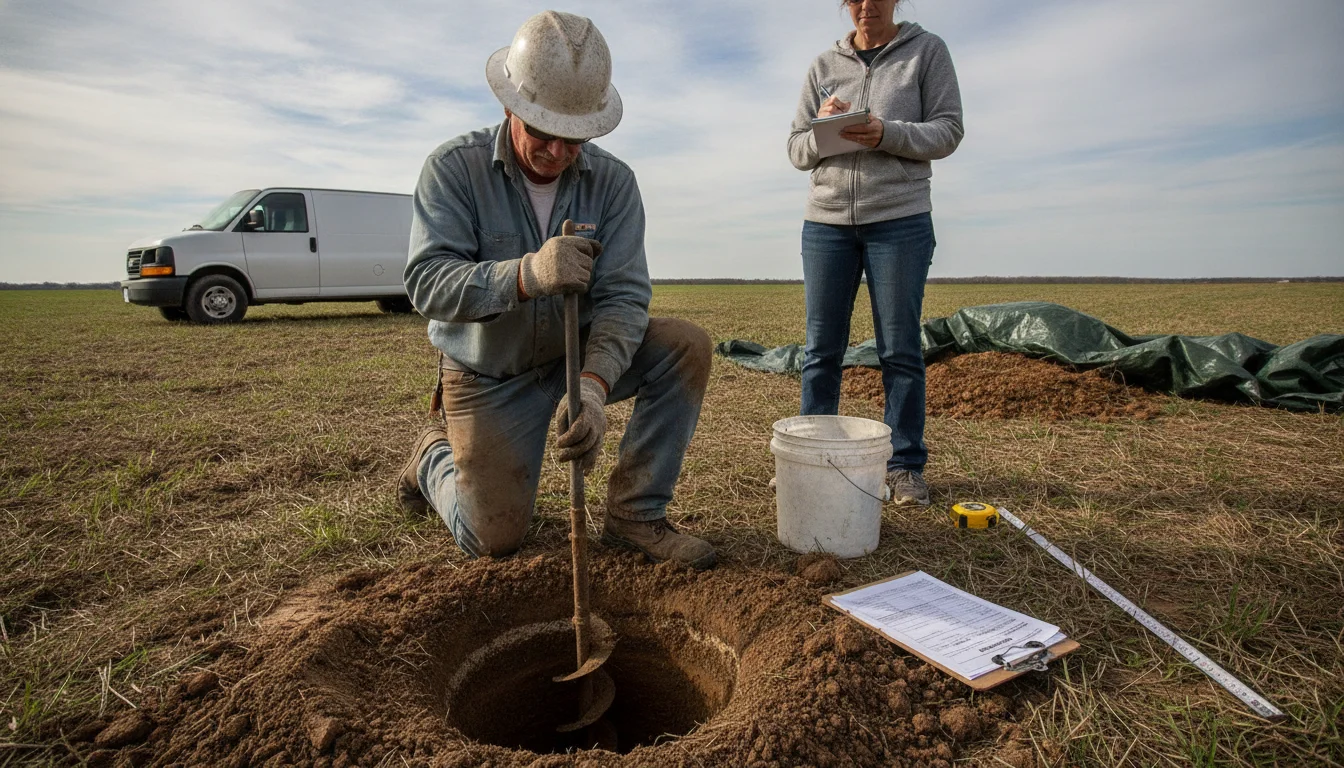
A licensed professional or approved county staff member is typically who performs a perc test, and the exact list varies by local rules. In Rogers, that can include county health staff, registered sanitarians, licensed engineers, or certified soil scientists. Always check your county’s current list of approved testers before you schedule.
Table of Contents
- What is a perc test and why do properties need one?
- Who performs a perc test in the United States?
- Which agency enforces perc testing rules where I live?
- When is a perc test required for permits and approvals?
- How is a perc test performed and how long does it take?
- How do I hire the right professional and prepare my site?
- What happens after the perc test—and what if it fails?
- Key takeaways
- Frequently Asked Questions
- Conclusion
What is a perc test and why do properties need one?
A perc (percolation) test measures how quickly water moves into soil and indicates whether the ground can safely treat wastewater from a septic system. Favorable rates support simpler systems, while slow or very fast rates may require specialized designs. Local permits commonly require acceptable results before you can build.
A percolation rate is the time it takes water to drop a set depth in a test hole, usually recorded in minutes per inch. Slow soils retain water too long; very fast sands let it move away too quickly. Both conditions may endanger groundwater. That is why counties use perc results to protect public health and the environment. Learn more about onsite wastewater basics from the U.S. EPA.
Soil findings guide system sizing and layout. Faster rates can allow smaller drain fields, while slower rates often need larger areas or advanced treatment. Test logs, soil textures, and depths to limiting features—like bedrock or a high water table—also matter. A designer uses this information to place trenches, choose media, and set elevations.
Approval considers more than a single hole. Technicians also identify the limiting layer, the first subsurface layer that impedes flow (such as clay or hardpan). They record the seasonal high water table, the highest water level during wet seasons. Setbacks from wells and streams apply, too. If results do not meet code, your project may need an alternative system or a variance.
In short, perc tests reduce guesswork. They show what your soil can support, prevent backups, and help you avoid redesigns by setting expectations early.
What a percolation rate actually measures
It measures the rate water moves through saturated soil. Professionals time the drop in inches over minutes. Rates that are too slow or too fast limit standard systems.
How soil results affect septic system design and approval
Designers match trench size, depth, and media to your soil’s rate and layers. Health staff then review the full plan and issue permits when it complies with code.
Who performs a perc test in the United States?
Counties often maintain a list of approved testers. Who performs a perc test may be a county sanitarian, a licensed professional engineer (PE), a certified soil scientist, or a registered environmental health specialist. In some areas, a licensed septic installer can test under permit. Always confirm who may legally submit results where you live.
Common roles include field testing, soil logging, and handling paperwork. An engineer may lead design and sign plans. A soil scientist classifies soil layers and identifies restrictive horizons. A sanitarian observes or performs tests for the county. A licensed installer can dig holes, place sleeves, and assist under a supervising pro.
States set different rules. Some require public health staff to perform tests. Others allow private professionals, but with county witnessing. A few require both a soil evaluation and a perc test. Where codes favor soil-based design, the soil log can weigh more heavily than the soak rate alone.
Ask for current credentials. Approved testers should present state or county licenses, active insurance, and recent training. They should explain the method used and how results will be reported on county forms. This helps avoid retests and delays.
Septic Tank Pumping Rogers works throughout Rogers each week with approved professionals and local health staff. That teamwork keeps testing and design on schedule, and it also speeds follow-up steps like Septic Inspection and Septic System Repair if planning uncovers issues.
Common roles: engineers, soil scientists, sanitarians, licensed installers
- Engineers design and sign plans.
- Soil scientists log soils and limits.
- Sanitarians enforce code and may test.
- Installers assist with holes and setup.
State-by-state differences in licensing and qualifications
Licensing titles and who may submit forms vary by state. Check your county health department’s guidance page for the current list.
Which agency enforces perc testing rules where I live?
In most areas, the county or local health department enforces onsite wastewater rules. Some regions rely on an environmental quality agency; a few use building departments. These offices publish forms, fee schedules, and handouts. Many also provide design manuals and testing guides online. For example, Massachusetts outlines testing under Title 5 on its official page.
Your first step is to identify the correct office. Search your county name plus “septic permits” or “onsite wastewater.” Confirm office hours and submission rules. Some departments require appointments for field witnessing; others accept drop-off of test results and design packages on set days.
Codes change over time. Use only current forms. If your property is near a lake, stream, or in a wellhead protection area, extra setbacks may apply. In those zones, testing sites and drain fields may shift to meet distance requirements. Some counties also set minimum soil depths to protect groundwater.
You can usually confirm the governing code on a county website. Look for a local ordinance, a state administrative code, or a manual the county adopts. If you are unsure, ask the duty sanitarian which standard applies. Keep a copy of the rule with your project file.
Have your parcel number and a site map ready when you call. That helps staff check flood zones, wetlands, or recorded easements. If special reviews are needed, allow extra time for approval. Testing windows can book quickly in wet seasons around Rogers, so schedule early.
Local health departments vs. environmental agencies
Counties typically lead enforcement. In some states, a state environmental office sets rules that counties implement. Always follow the stricter requirement.
How to verify the governing code and required forms
Open your county’s septic permits page. Download the latest forms and fee list. Confirm submittal steps by phone or email before testing.
When is a perc test required for permits and approvals?
A perc test is often required for new homes on land without sewer. It’s also common for additions that increase bedroom count, for lot splits, and for system replacements when a drain field fails. Some lenders request a recent test before the sale of unimproved lots.
Counties may also require testing when you add a bedroom or convert space. Bedroom count is a proxy for daily wastewater flow. More bedrooms mean more gallons, so the drain field must match the increased use. If there is no room to expand, an alternative system may be necessary.
Seasonal conditions can delay tests. High water tables in spring or after storms can invalidate readings. Many counties pause testing during saturated periods to ensure accuracy. In drought conditions, pre-soak steps may be extended to simulate normal moisture.
Site conditions matter. Frozen ground, steep slopes, or dense brush can slow work. If the site is too wet for equipment access, staff may reschedule. When in doubt, ask your tester about timing and site preparation. Good planning can save return trips.
If you already have a septic system, you may not need a test for simple repairs. But for a full drain field replacement, a new evaluation is common. A Septic Inspection can identify what failed and whether soil or layout changes are needed. Drain Field Repair may be an option if soil is sound and lines are the issue.
Typical triggers: new builds, additions, lot splits, replacements
- New home on a septic lot
- Bedroom additions or conversions
- Lot splits and boundary changes
- Failed system replacement permits
Seasonal and site conditions that can delay or invalidate tests
Heavy rain, snow, frozen soil, and high groundwater can skew readings. Steep slopes and poor access can also delay scheduling.
How is a perc test performed and how long does it take?
Most tests take a few hours in the field, plus time to prepare reports. Steps include marking test spots, digging holes, screening sides, pre-soaking, and timing drops. Results are recorded on official forms. Some counties must witness the test. Good notes and photos help prevent retests.
Site preparation comes first. The tester identifies a likely drain field area based on setbacks. Holes are dug to test depth. Sides are scarified to allow uniform water movement. A stone layer or sleeve keeps the bottom flat. Each hole is filled with water to pre-soak.
During testing, the pro sets a water level, starts a timer, and measures how far the water drops within a set interval. They repeat this several times until readings stabilize. They document soil textures, colors, and any redox features that indicate seasonal wetness. If a limiting layer is encountered, plans are adjusted accordingly.
Documentation is crucial. The tester completes county forms, notes weather and soil conditions, and adds a sketch map. If the county requires witnessing, the officer signs the form. Keep copies for your records. Many departments will not accept photos alone; they require the official log.
Time on site can vary. If access is straightforward and soils are simple, same-day testing is common. If clearing is needed, or water rises in holes, expect delays. Ask your professional how long tasks like digging in rocky soils may take.
You can read general practice guidance in EPA resources on onsite systems at the EPA septic portal.
Site prep, test holes, soaking, timing, and documentation
The tester prepares holes, pre-soaks, and times water drop. They log soils and complete county forms. Witnesses sign if required.
Common field pitfalls and how pros avoid retests
- Not pre-soaking long enough
- Testing in flooding conditions
- Damaging hole walls
- Missing required depths or locations
How do I hire the right professional and prepare my site?
Begin with your county’s roster of approved testers. Then check license status, insurance, and experience with local forms. Ask how many tests they completed in the past year. A solid pro will explain procedures clearly and set expectations for timing and reporting.
Screen for conflicts of interest. In some places, the designer, installer, and tester can be the same company; in others, they must be separate. Ask your county what is allowed. If one firm can handle all three roles, request detailed documentation and signed logs for your file.
Good site prep keeps the day efficient. Ensure gate access and firm parking for a truck. Stake the test area if possible. Mark underground utilities before digging. Keep pets and children indoors on test day. If erosion control is likely needed, have silt fence or wattles ready.
Many owners plan related services at the same time. A Septic Inspection can verify tank condition before design. If you have an aerobic system, coordinate Aerobic Septic System Service checks with testing. If replacing a cesspool, plan Cesspool Pumping and Service before new work.
Credentials, insurance, and conflict-of-interest checks
- Current license or certification in Arkansas
- Active liability insurance
- Recent experience with your county’s forms
- Clear role separation when required
Pre-test checklist: access, utilities, staking, erosion control
- Provide gate codes and access routes
- Call utility locate before digging
- Stake the proposed area and corners
- Set basic erosion controls if needed
What happens after the perc test—and what if it fails?
After testing, your designer converts logs and soil notes into a septic plan. That plan sets trench sizes, elevations, any pump specifications, and a layout map. The packet goes to the county with forms and fees. Staff review it and then approve, request revisions, or deny.
If results are strong, you can move to installation. Your installer schedules work and calls for inspections at key milestones. Keep all documents for future real estate needs. Buyers often request recent testing and permits when you sell land.
If results are marginal, you still have options. A mound system raises the drain field above slow soil. An aerobic treatment unit (ATU) adds air and treatment before dispersal. Drip systems can fit tight lots. In limited cases, a variance may allow a modified design when no standard approach fits.
If results fail, ask your pro about retesting in a different season or at a different site on the lot. Sometimes moving the field upslope or adjusting the house location helps. Where no septic solution fits, connecting to sewer (if nearby) may be required.
Drain Field Repair can help if failure is due to damaged lines rather than soil limits. Septic System Repair can resolve clogs, crushed pipes, or pump issues. Your designer and installer will recommend the path that fits your soil and layout.
Turning results into a septic design and permit package
Your pro prepares a full plan based on the test data. The county reviews and approves if it meets code. Keep copies for your records.
Alternatives for marginal soils: mounds, ATUs, and variances
Options include mound systems, ATUs, and drip dispersal. A variance may apply when no standard system fits and health goals remain met.
Key takeaways
- Approved pros perform perc tests, and requirements vary by county and state.
- Soil and percolation results drive system size, layout, and design choices.
- Local permits frequently require testing for new builds, additions, and replacements.
- Seasonal timing and site access planning help prevent delays and retests.
- If tests fail, alternatives exist, including mound systems and ATUs.
Frequently Asked Questions
How do I find someone qualified to do my test?
Check your county health department’s approved tester list, then verify licenses, insurance, and recent work. Ask for sample reports. Good pros explain the method and forms clearly. If you are unsure, ask Septic Tank Pumping Rogers for local guidance and we can help you navigate next steps.
How long does a typical perc test take?
Field work often takes a few hours, plus time to complete forms. If the site is wet, rocky, or hard to reach, it can take longer. Scheduling can add days if a county witness is required. Ask your tester for a timeline in Rogers.
Do I need a perc test for a home addition?
If the addition adds a bedroom, many counties require testing or a review. Bedroom count raises daily flow. The drain field must match the new load. If no space exists to expand, an alternative design may be needed. Confirm with your local health office.
What if my soil is clay and perc rates are slow?
Slow clay can still work with the right design. Mound systems, ATUs, or drip dispersal may be options. Your designer will size the field to the rate and soil layers. If needed, they can request a variance under local rules.
Is searching “perc test near me” a good way to start?
It can help you find nearby firms, but always confirm they are approved by your county. Ask for licenses, insurance, and recent reports. Local familiarity with Rogers soil conditions and county forms is more important than distance.
Conclusion
Septic Tank Pumping Rogers helps property owners plan tests, designs, and permits with fewer delays by coordinating with approved testers and your health department. For local help across the city and surrounding neighborhoods, our team is ready. Contact us.
If you are not sure which of these you are dealing with, it is worth having someone look at it before it turns into a bigger job. Get in touch with Septic Tank Pumping Rogers today and we will tell you where you stand.