A drain field is usually placed in shallow soil, but its depth changes from one property to another. The answer to how deep is a drain field depends on soil, groundwater, slope, system design, and local rules. Approved plans and careful site checks give the safest answer for Rogers property owners.
A drain field is also called a leach field or septic system drain field. It receives liquid wastewater after solids settle in the tank. The soil helps filter and treat that liquid before it moves farther underground. The field’s location and depth both affect how well the system works.
People often ask this question before buying a home, planting trees, adding a building, or repairing a septic system. A drainfield can be hard to see from the surface. Records, yard clues, and careful locating can help. Avoid deep digging because it may harm pipes, tanks, utilities, or the soil treatment area.
Table of Contents
- How deep is a drain field typically installed?
- What determines how deep a drain field should be?
- How does the drain field work below the soil surface?
- Can a drain field be too deep?
- How deep should drain field trenches be?
- How can you find the depth of an existing drain field?
- How do you locate the drain field on your property?
- How do slope and distance affect drain field placement?
- What problems can occur when a drain field is installed at the wrong depth?
- How should you verify a drain field’s depth and condition?
- Frequently Asked Questions
How deep is a drain field typically installed?
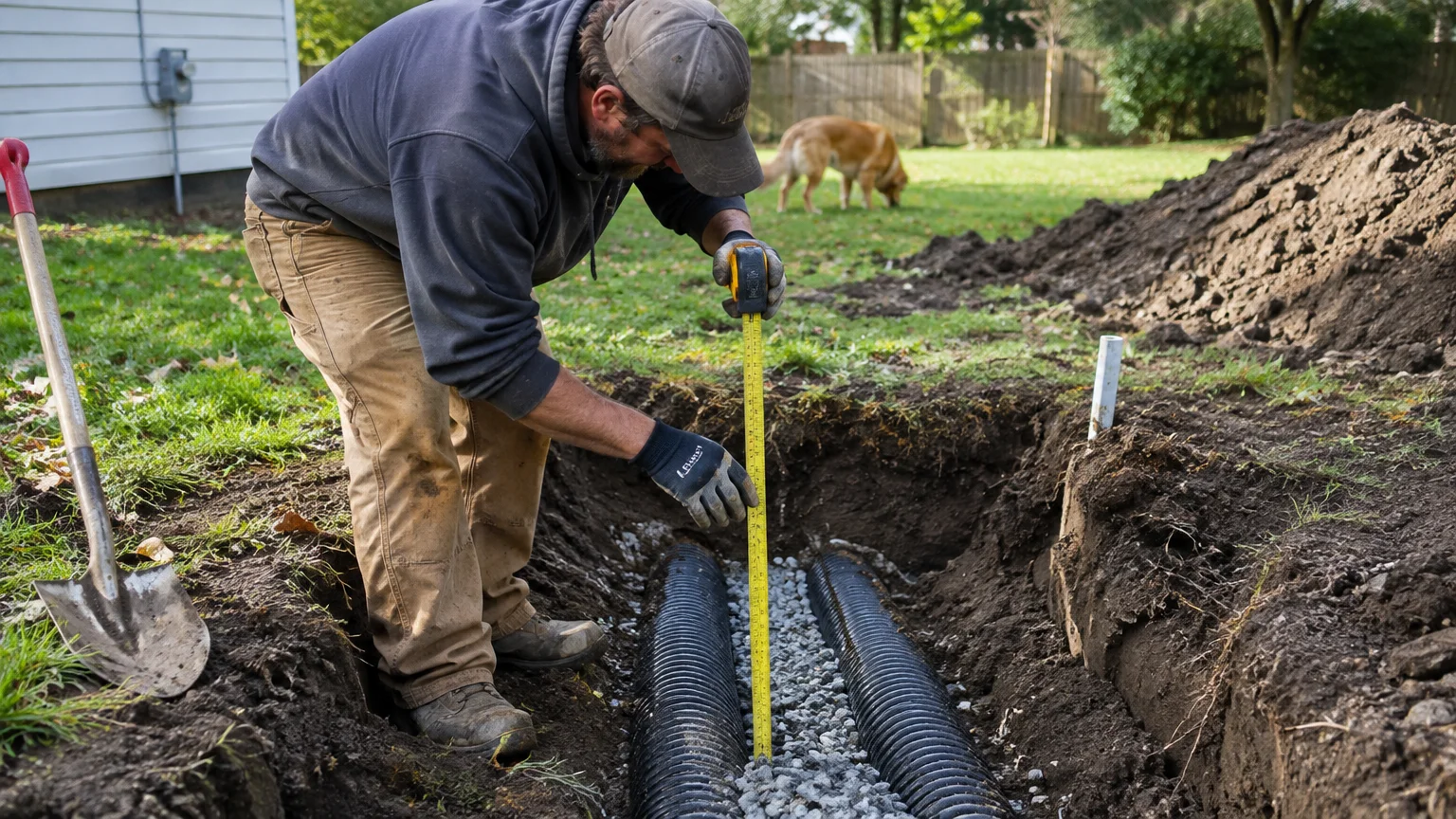
A drain field is often placed in a shallow layer of soil. Still, no single depth works for every home. The field must have enough good soil below it to treat wastewater. It must also stay above groundwater, solid rock, hard soil, or another limiting layer.
The number of inches or feet matters less than the soil below the trenches. A shallow field can work well when the soil drains at the right speed. A deeper field may work poorly if wastewater reaches groundwater too quickly. It may also fail if water meets a dense soil layer.
Why the soil absorption area is usually shallow
The soil absorption area needs air, good soil, and room for water to move. A shallow design lets wastewater spread through the planned treatment layer. It also makes future checks and repairs easier than a very deep system.
The field may sit below grass, mulch, or a thin layer of topsoil. It should not be covered by a driveway, shed, pool, or heavy fill unless the approved plan allows it. Added soil can change water flow and make the field too deep for its design.
A lawn may show only small signs of a field below it. Some fields have raised rows, while others look level with the yard. Green grass, soft ground, or early snow melt may point to buried pipes. These signs cannot prove the exact depth.
How drain field depth differs from septic tank depth
A septic tank is a sealed container that holds wastewater. Solids settle inside the tank before liquid leaves through the outlet. A drain field is a wider soil area that treats that liquid. The tank may be deeper than the field because it needs cover and firm support.
Do not assume the drain field sits beside the tank. The tank may be near the house, while the field reaches another part of the lot. Approved plans are the best first place to review this layout.
What determines how deep a drain field should be?
Soil and site conditions usually decide the field depth. Designers look at soil type, drainage, groundwater, rock, slope, expected water use, and system type. Local rules then guide the final design and permit.
The same home may need a different field on another lot. Sand, clay, silt, gravel, and mixed soil handle water in different ways. The system must match the real soil on the property. A general rule from another area may not apply in Rogers.
Soil type, drainage, and seasonal groundwater
Soil type affects how fast wastewater moves. Sandy soil may let water move quickly. Clay may slow it down. Very fast movement can leave too little time for treatment. Very slow movement can cause water to gather near the surface.
Seasonal groundwater also matters. The water table may rise during wet months, heavy rain, or snow melt. A field that looks dry in summer may face much wetter soil later. The design must protect the treatment layer during those wet periods.
Shallow rock, hardpan, and compacted fill can limit a field. Hardpan is a dense soil layer that slows water movement. A site check may need several test areas because soil can change across one yard.
Local regulations and approved system design
Local health and environmental offices set septic rules. These rules may cover soil tests, setbacks, trench design, reserve areas, groundwater, and permits. Requirements vary by county and state. Local records are more useful than a general depth found online.
An approved plan may show the tank, distribution box, trenches, reserve area, buildings, wells, and property lines. It may also list elevations and design notes. An old plan may not show later repairs or changes, so it should be checked against the current property.
A property owner in Rogers can ask the local office about septic records. Septic Tank Pumping Rogers can also help Rogers homeowners understand what those records may show during a site visit. Records should guide the review, not replace it.
How does the drain field work below the soil surface?
The septic tank removes much of the solid waste before liquid leaves. That liquid is called effluent. It flows toward the drain field through an outlet pipe. The field then spreads it through pipes, chambers, or another approved system.
A drain field is not just a buried pipe that carries water away. It is a planned treatment area. The tank outlet, distribution box, laterals, trench base, soil, and ground cover all work together.
The role of trenches, pipes, and aggregate
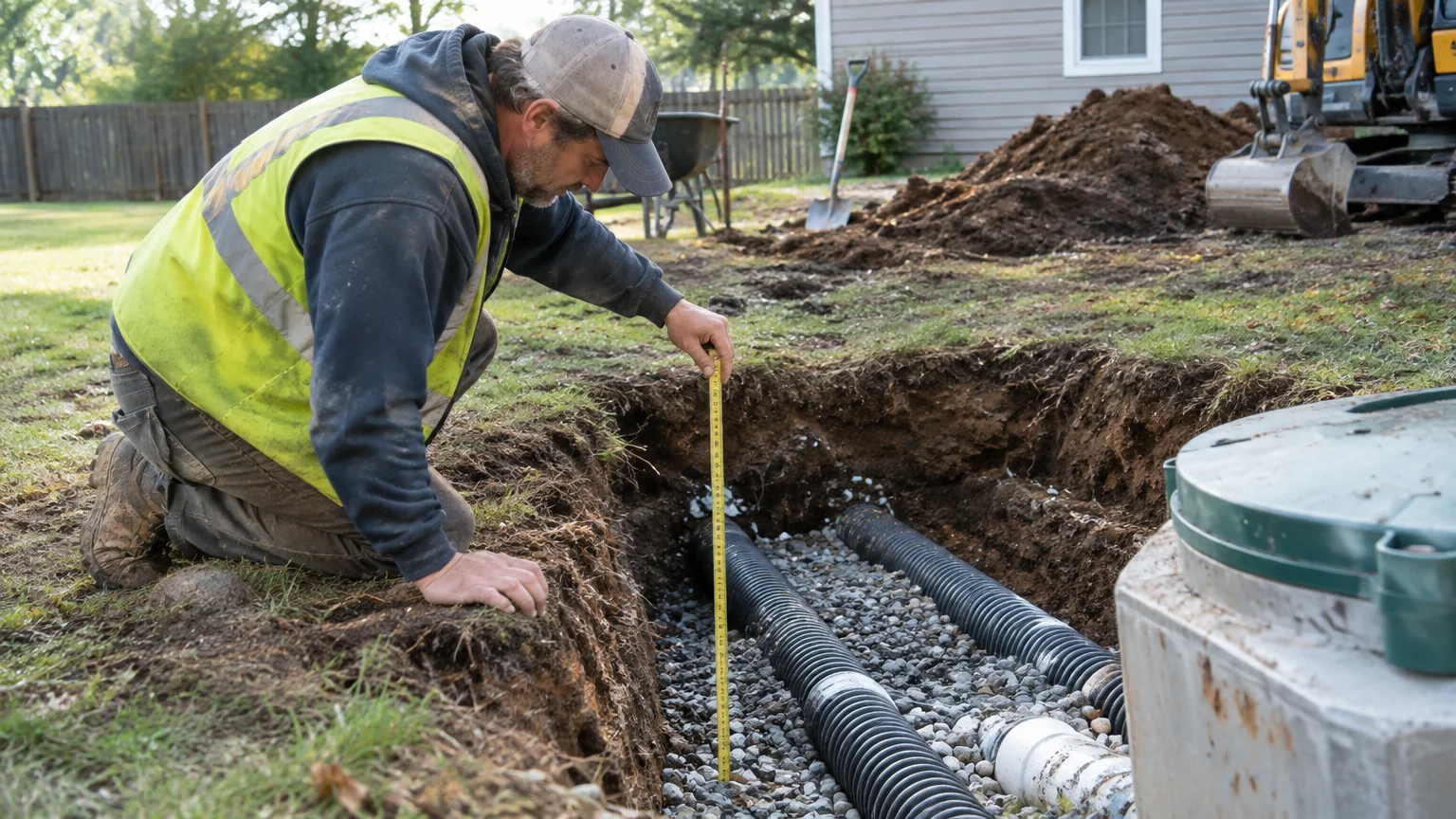
Older systems often use perforated pipes in trenches filled with clean stone. The pipes release effluent along the trench. Some newer systems use plastic chambers, drip lines, or pressure pipes.
Aggregate means clean stone or approved support material. It gives liquid room to spread around the pipe. Chambers create open space around the pipe without using the same amount of stone.
The approved plan decides which design is right. Do not add stone, extend a line, or connect another pipe without approval. A small change can send too much wastewater to one part of the field.
How wastewater moves through the treatment area
Wastewater moves from the tank to a distribution point. Gravity or a pump then sends it through several lines. Soil receives the liquid and helps remove harmful material through filtering and natural soil action.
The field needs time between flows. Too much water can overload the soil. Roof water, sump pumps, irrigation, and surface runoff should stay away from the field. Keeping clean water out is one simple way to protect the system.
Grass is often a good surface cover. It has shallow roots and helps limit soil loss. Trees, deep-rooted plants, vehicles, and buildings can harm lines or press down the soil. Keep the field open and protected.
Can a drain field be too deep?
Yes. A drain field can be too deep if the trenches sit below the good treatment soil. It may also be too deep if it reaches groundwater, rock, hardpan, or another limiting layer. More depth does not always mean better treatment.
Deep burial can make checks and repairs harder. It may hide early warning signs and increase the risk of damage during later work. Added fill can create the same problem even when the original field was installed correctly.
Why excessive depth can limit soil treatment
Wastewater needs the right soil conditions for treatment. If it reaches a limiting layer too soon, it may move sideways or collect. It may also reach groundwater before the soil has treated it well enough.
The field must stay above seasonal groundwater. When water rises into the treatment area, wastewater has less room to move safely. This is why wet-season soil checks can matter on difficult properties.
Some approved systems are deeper than others. A raised field, mound, pump system, or other design may help when natural soil is not suitable. These systems should never be made by guessing or adding soil without a plan.
Signs that the installation depth may be unsuitable
Surface signs can point to a problem, but they do not prove the cause. A wet area may come from a broken water line, poor yard grading, rain, or a failed field. A careful inspection is needed before digging or planning repairs.
Possible warning signs include:
- Grass that stays very green over one part of the field.
- Soft, wet, or muddy soil during normally dry weather.
- Slow drains or backups inside the home.
- Sewage smells near the field or distribution box.
- Wastewater appearing above trenches or chambers.
- Erosion, settling, or low spots in the yard.
Treat these signs seriously when several appear together. Keep children and pets away from sewage on the ground. Do not cover the area with more soil before finding the cause.
How deep should drain field trenches be?
Trench depth depends on the system plan, soil, local rules, and treatment method. The trench is not dug only to fit a pipe. It must leave enough soil around and below the distribution area.
A trench may look simple from above. However, its depth, width, spacing, pipe position, stone, cover, and slope all matter. A pressure system may have different dimensions from a gravity system. A chamber system may not use a traditional stone trench.
Trench depth, width, and separation
Trench depth is the distance from the finished ground surface to the excavation. Width is the side-to-side space for the pipe or chamber. Separation is the space between trenches and nearby limiting features.
The finished surface matters because later grading can change the cover. Adding soil raises the surface but does not move the trench. Removing soil may expose pipes and leave them open to freezing or damage.
Trenches should stay level or follow the approved grade. An uneven trench can send too much wastewater to one area. That area may become overloaded while other parts receive less water.
Why trench dimensions vary by system type
Gravity systems depend on height and a steady slope. Pressure systems use a pump and small outlets to spread wastewater more evenly. Chamber systems use open spaces, while drip systems use narrow tubing near the soil surface.
The number of bedrooms, expected water use, soil loading rate, and available space can affect the layout. A larger home may need more treatment area or a different design. It does not always need deeper trenches.
A professional should compare the field with the permit and design. Changing the trench size without approval may create safety, legal, and system problems. It may also use the reserve area needed for future repairs.
How can you find the depth of an existing drain field?
The safest way to find drain field depth is to start with records. Then confirm the layout with careful surface checks. Avoid blind digging because buried pipes, utilities, and tanks may be nearby.
Depth may mean the top of a trench, the trench bottom, the pipe center, or another point. This is why a plan must be read closely. Two people may use the word depth while talking about different parts.
Reviewing permits, plans, and property records
The local permit office may have a septic permit, as-built drawing, repair record, or soil report. A closing file, inspection report, or former owner may also have useful records. These documents can show the tank, distribution box, field lines, slope, and reserve area.
Records may be old or incomplete. New additions, repairs, replaced tanks, and unapproved work can change the layout. A plan is a good starting point, but it does not prove every buried part remains in place.
Keep copies of all septic records in a safe spot. A simple property sketch can show the tank, cleanouts, field, wells, buildings, and access route. Photos taken before yard work may help future owners understand the system.
Using careful site checks without damaging the system
A homeowner can review plans, walk the yard, check cleanout covers, and note changes in grass or soil. These checks do not require opening tanks or probing deeply. Before digging, follow local rules for marking underground utilities.
A septic worker may use locating tools, inspection ports, or safe probing methods. The method should fit the property and avoid broken pipes or damaged covers. Keep heavy equipment away until the field location is known.
The depth of one exposed pipe does not prove the depth of every trench. A field may follow a slope, and soil cover may change across the yard. Several safe checks may be needed to understand the full layout.
How do you locate the drain field on your property?
The drain field is often beyond the tank, in the direction of the outlet pipe and site plan. Its location still depends on slope, soil, lot shape, and the approved design. It may sit beside the tank, behind the house, or in another part of the property.
Finding the tank first can help. The field often connects to the tank’s outlet side. Still, old systems may have different layouts. Never assume the field’s location from the house alone.
Clues from the septic tank, plumbing, and landscape
The tank may have lids, risers, cleanouts, or a pipe leading away from the home. A distribution box may sit between the tank and the field. Straight rows, grass strips, and small ground changes may point toward buried lines.
Landscape clues can appear after rain or during dry weather. One part of the yard may drain differently. Snow may melt sooner above warm wastewater lines. Grass may grow faster where moisture sits near the surface.
These clues do not confirm the field boundary. Irrigation, old repairs, natural soil changes, and poor grading can look similar. Use records and safe locating before digging, planting, building, or driving over the area.
Why professional locating may be safer than digging
Guessing where to dig can crush a pipe, uncover sewage, damage the tank, or disturb the soil. It may also harm underground utility lines. Repairing that damage can create a larger problem than careful locating would have avoided.
Professional locating is wise before adding a deck, fence, pool, driveway, drainage trench, or tree. Tell the worker about the planned project. Provide every septic record you can find.
Septic Tank Pumping Rogers serves property owners in the main Rogers area. Service areas include Downtown Rogers, Bentonville, Lowell, Cave Springs, Pea Ridge, and nearby communities. A clear plan helps protect the field and gives future workers safer information.
How do slope and distance affect drain field placement?
Slope affects how wastewater moves by gravity. Distance affects the route from the tank to the field. It also affects space between the field and wells, buildings, streams, property lines, and other features.
A field needs more than an empty part of the yard. It needs good soil, safe height, enough room, and access for future checks or repairs. Local rules decide many required distances.
Gravity flow, pressure distribution, and elevation
Gravity systems need the tank, distribution box, and field at useful heights. If the field is too high, a pump may be needed. If it is too low, wastewater may move too fast or gather in the wrong place.
Pressure distribution uses a pump and controlled outlets. It can help on sloped land or when gravity would not spread flow well. Pumps add parts that need power, alarms, and care.
Surface water should flow away from the field. Roof leaders, paved areas, and yard channels should not send water toward the trenches. Wet soil has less room for new wastewater.
Required setbacks from wells, buildings, and boundaries
Setbacks protect drinking water, buildings, nearby land, and the septic system. Exact distances depend on local rules and system type. Wells, streams, wetlands, property lines, and buildings may limit the field location.
Do not rely on a neighbor’s layout or a general distance from another website. Rules can change by location. The local permit office can explain which rules apply to a specific property.
Setbacks also protect access. A field may meet a minimum distance but still sit under a future driveway. Good planning keeps the field and reserve space open for later work.
What problems can occur when a drain field is installed at the wrong depth?
The wrong depth can cause poor treatment, slow drains, odors, surfacing wastewater, or backups. The cause may also be a full tank, excess water, pipe damage, or poor care. Confirm the cause before assuming depth is the problem.
A field can struggle when it is too shallow, too deep, uneven, covered with fill, or placed over poor soil. Heavy traffic can press down the treatment area. Roots may enter broken pipes. Stormwater can overload the ground.
Surface failures, odors, and slow drainage
When wastewater cannot move through the soil, it may collect near the surface. It may also flow back toward the tank. Toilets and sinks may drain slowly. Wet ground or sewage smells may appear above the field or near the distribution box.
A failing field may show green grass, standing water, or soft soil. These signs are more urgent when sewage is visible. Keep people and pets away. Seek help instead of covering the area with soil.
A house-line blockage can look like a field failure. A full tank, broken outlet baffle, damaged distribution box, or failed pump can look similar. A full system check can separate these problems.
How pumping and maintenance relate to drain field health
Regular septic tank pumping removes settled solids before they leave the tank. The right schedule depends on tank size, household use, solids, and local guidance. Pumping protects the field, but it cannot repair a field that has failed.
Homeowners can fix leaks, spread laundry across the week, and keep grease out of drains. They should avoid harmful disposal habits. Keep vehicles, sheds, and deep-rooted plants off the field. Send roof and sump water away from it.
Pumping does not let a field accept unlimited water. It also does not replace an inspection when sewage appears or drains slow. The tank, plumbing, field, and soil should be cared for as one system.
How should you verify a drain field’s depth and condition?
Verify drain field depth through records, safe surface checks, and a qualified inspection when needed. The goal is to confirm the location, design, soil, and signs of stress without damaging buried parts.
Useful information includes the original permit, repair history, pumping records, site sketch, tank location, and known property changes. Photos of wet areas or grass changes can also help during an inspection.
What a property owner can document before an inspection
A short written record can make the visit more helpful. Note when slow drains began, where smells appear, and when wet spots form. Record whether rain changes the yard. Mark buildings, wells, fences, driveways, and planned projects.
Useful items include:
- Septic permits, plans, and inspection reports.
- Tank pumping dates and known repair work.
- Locations of lids, cleanouts, risers, and wet areas.
- Recent grading, landscaping, building, or irrigation changes.
- Household changes that may increase water use.
- Photos from several angles during dry and wet weather.
A homeowner should not open a tank alone or enter one. Septic tanks can contain toxic gas and unsafe air. Surface notes and photos are usually enough to begin a safe review.
When to contact a septic professional or local authority
Professional help is needed when the field cannot be found, the depth is unclear, wastewater surfaces, a pump alarm sounds, or planned work may cross the field. The local authority may handle records, permits, repairs, or failed-system reviews.
Ask what the inspection will cover and which records to bring. The check may include the tank, outlet, distribution box, field surface, pump, soil, and nearby water flow. The exact work depends on the concern.
Septic Tank Pumping Rogers can help property owners review septic system concerns. Contact us to discuss the drain field’s location, depth, or condition before repair or property work.
Frequently Asked Questions
Is a leach field the same as a drain field?
Yes. Leach field and drain field are common names for the soil treatment area. Some people spell it leech field, but they often mean the same septic feature. An approved plan may use another term, such as soil absorption field.
Can a homeowner dig to find a drain field?
A homeowner can review records and look for surface clues. Blind digging is risky. It may damage pipes, utilities, tanks, or treatment soil. Professional locating is safer before construction, planting, grading, or driveway work.
How deep should a septic tank be compared with its drain field?
A septic tank and drain field may sit at different depths and heights. The tank needs cover and a safe connection to the house. The field needs good soil below its trenches. The approved plan is the best way to compare them.
Who can perform a perc test?
A perc test means a percolation test. It checks how quickly water moves through soil. A qualified soil worker, engineer, site evaluator, or other approved person may perform it. Local rules decide who can do the test.
How can someone locate a septic tank and drain field?
Start with permits, property records, cleanouts, tank lids, and the pipe route from the house. Yard clues may help, but they do not confirm the layout. Professional locating is safer when records are missing or construction may harm buried parts.
Key Takeaways
- Drain field depth depends on soil, groundwater, slope, design, and local rules.
- A leach field is usually a shallow soil treatment area.
- Added fill, deep digging, vehicles, roots, and stormwater can harm it.
- Records and careful locating are safer than guessing and digging.
- Pumping protects the tank and field but cannot fix every field problem.
Conclusion
The answer to how deep is a drain field depends on the soil, water conditions, system design, and approved plan. A shallow field may work well when enough good soil lies below it. A deeper field may fail if it reaches groundwater, rock, or another limiting layer.
Start with permits, site plans, surface clues, and pumping records. Avoid blind digging, heavy traffic, deep-rooted plants, and extra water near the field. When the layout or condition is unclear, a qualified septic worker can help check the system safely.
Septic Tank Pumping Rogers helps property owners understand septic tanks and drain fields.
If you are not sure what you are dealing with, it is worth having someone look at it before it turns into a bigger job. Get in touch with Septic Tank Pumping Rogers today and we will tell you where you stand.