The answer to how much to get septic tank installed depends on the tank size, soil, access, system design, permits, and local rules. An easy site may need less work than a steep or rocky lot. The final cost is confirmed in a detailed quote after the property is reviewed.
A new septic system is a major project for a property owner. It can affect a family home, rental property, or future sale. Knowing what goes into the work helps you understand a quote and avoid surprise changes. For basic information about available work, review septic services.
Table of Contents
- How much does it cost to get a septic tank installed?
- What factors drive the cost of a new septic installation?
- How does septic tank size affect installation cost?
- How do access and excavation affect the installation price?
- How much do different septic system types affect the cost?
- How does location affect new septic installation costs?
- What should a septic installation quote include?
- Frequently Asked Questions
How much does it cost to get a septic tank installed?
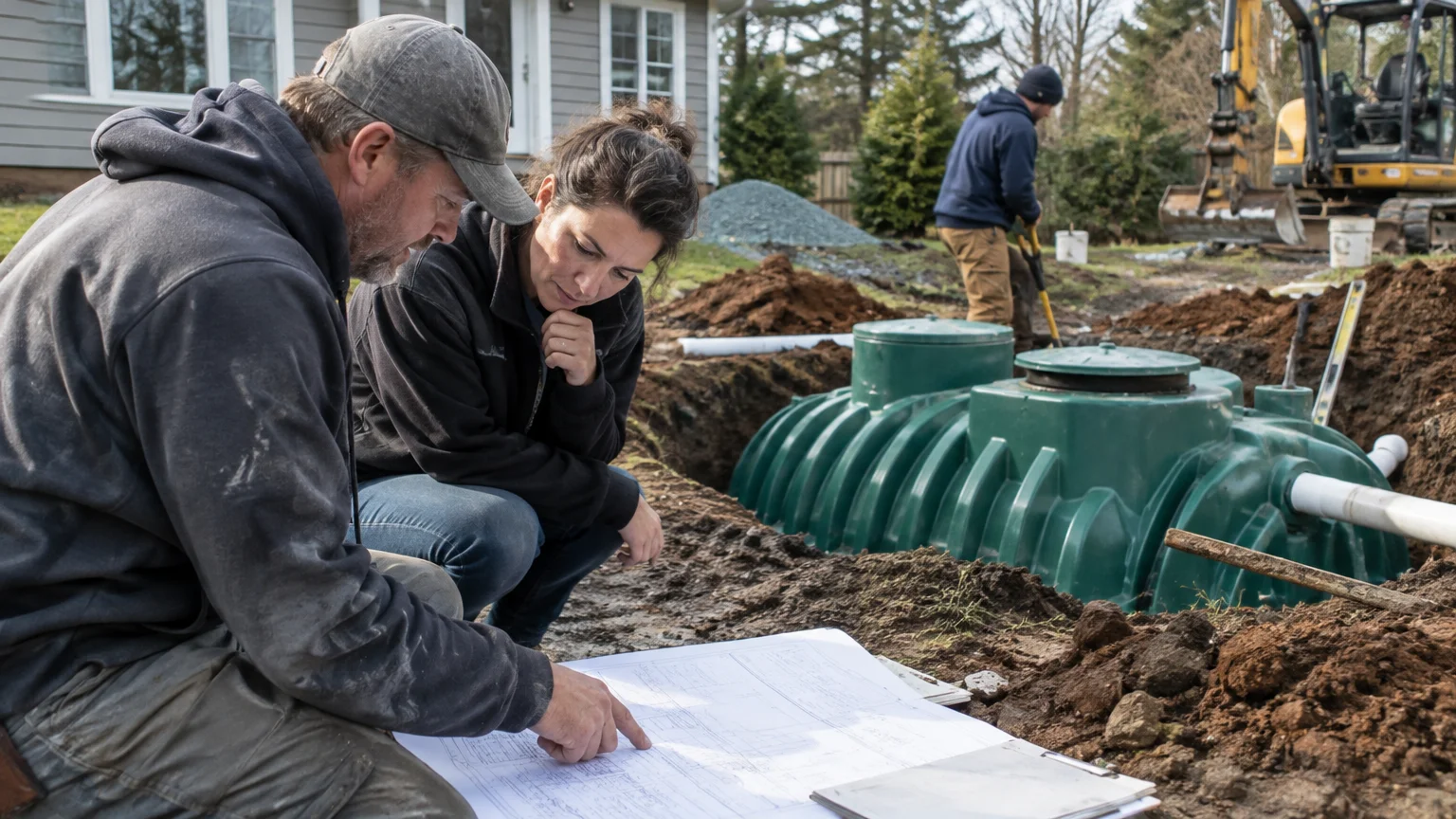
The cost changes because each property has different needs. A new system may need a tank, drainfield, soil test, design, permits, pipes, digging, inspections, and final grading. The quote should cover the full project, not just the tank.
Why installation costs vary from one property to another
A flat lot with open access is often easier to prepare. Soil that drains well may allow a basic drainfield. Poor soil, shallow rock, high groundwater, or limited space may call for a different system.
The distance from the home to the tank also matters. Longer pipe runs need more digging and materials. A driveway, wall, pool, or large trees can make the work harder. Local rules may also call for extra plans or inspections.
How new installation compares with septic tank replacement
A new installation often needs a full site review and new system design. Septic tank replacement may reuse some existing parts, but this is not always possible. Old tanks, broken pipes, failed drainfields, or new rules can add more work.
Do not assume replacement will always be easier. The old system may be hard to find or may not meet current rules. Septic Tank Pumping Rogers can help Rogers property owners learn which site conditions may affect the project before work starts.
What factors drive the cost of a new septic installation?
The main factors are the site, system design, labor, materials, permits, and cleanup. A proper review looks at how wastewater leaves the home. It also checks how the soil can treat that water and where the system can safely go.
How soil, lot size, and site conditions affect the project
A soil test helps show if the drainfield can treat wastewater safely. A drainfield is the area where treated liquid moves into the soil. Slow-draining soil may need a raised or special design.
A small lot may limit where the tank and drainfield can be placed. A larger lot may offer more choices, but it can still have rock, slopes, or wet areas. Trees, wells, streams, and property lines may also limit the layout.
The number of bedrooms can affect the system design. Bedrooms help show the possible use of the home. Water use also matters. A large family, rental home, or home with many guests may place more demand on the system.
Which permits, inspections, and preparation steps may be required
Most new systems need approval from a health department or another local agency. Rules differ by state and county. They may require a site review, soil test, design papers, permit review, installation checks, and final approval.
Ask who will handle each step. Some contractors prepare the papers, while others ask the owner to submit them. The quote should say if design work, permit help, inspections, and testing are included.
How does septic tank size affect installation cost?
Tank size affects the materials, digging, delivery, and system plan. The right size depends on the home, expected water use, local rules, and approved design. A larger tank is not always the right answer.
How household size and wastewater use determine tank capacity
A home with more bedrooms may need more treatment space. Several bathrooms, frequent visitors, or high water use may also affect the plan. Laundry, appliances, and future home additions can change water demand.
A professional can review the home and expected use. The goal is to choose a tank that works with the drainfield and local rules. Do not choose a tank by guessing or copying a neighbor’s system.
Why choosing the right tank size matters for long-term performance
A tank that is too small may not give solids enough time to settle. More solids may then move toward the drainfield. This can lead to problems later.
A tank that is too large may add work without fixing the real issue. The drainfield or system design may still be wrong. Ask how the tank size was chosen and how it fits the full system.
Regular care still matters after installation. A homeowner can watch for slow drains and unusual odors. Tank work, pumping, and digging should be left to trained professionals. Simple water-use habits can also help protect the system.
How do access and excavation affect the installation price?
Access and digging can change the project scope. Equipment must reach the work area. Crews must also dig safely for the tank, pipes, and drainfield.
Tight access may require smaller equipment or more planning. A clear route often makes the work easier. The final cost is confirmed on a quote after the site and needed work are reviewed.
What makes a property easier or harder to reach
Open yards with a clear path are often easier to prepare. Gates, narrow driveways, steep slopes, fences, sheds, and power lines can limit equipment. Crews may also need to protect homes, wells, trees, and utility lines.
Before digging, the work area should be checked for underground utilities. The tank location should also allow future inspection and pumping. A buried lid can make regular service harder, so the final location should be recorded.
How digging, landscaping, utilities, and site restoration add work
Digging can disturb grass, gardens, paths, driveways, and soil. Rock or groundwater may slow the job. After installation, the area may need backfill, grading, erosion control, or basic surface repair.
The quote should explain what cleanup and restoration are included. It should also say what the owner must handle. Fences, plants, paved areas, or other features may need to be moved before work begins.
Clear planning helps prevent confusion when the crew reaches the property. It also helps owners compare quotes by the work included. This is more useful than comparing one broad number.
How much do different septic system types affect the cost?
System type is a major design factor. A conventional system may work when the soil and lot have enough space. An alternative system may be needed when the site has poor drainage, little room, or other limits.
How conventional systems differ from alternative systems
A conventional system usually has a septic tank and a drainfield. The drainfield treats wastewater in the soil. An alternative system may use pressure distribution, a mound, a sand filter, an advanced treatment unit, or another approved design.
The site review and local rules decide which system is allowed. A more complex system may need extra parts, controls, inspections, and care. Owners may also need to learn about alarms, access points, and service times.
When pumps, treatment units, or advanced designs may be needed
A pump may be needed when wastewater must move uphill. It may also be needed when the drainfield is above the tank. Treatment units may help when the soil or site cannot support a basic system.
These parts can add installation work and future care. Ask what each part does and what happens if it stops working. The quote should list pumps, electrical work, controls, alarms, filters, and treatment equipment.
A professional should handle system design, electrical work, tank setting, and testing. Homeowners may watch for alarms or slow drains. They should never enter a tank or try dangerous repairs.
How does location affect new septic installation costs?
Location affects labor, materials, travel time, permits, and system rules. Costs can change between counties and nearby properties. A site review is more useful than a broad guess for the whole area.
Why regional labor, regulations, and material availability matter
Local rules may set distances from homes, wells, property lines, streams, and other features. They may also control tank types, drainfield designs, inspections, and operating permits. Material supply can affect the schedule when a special tank or treatment unit is needed.
Weather and ground conditions can affect the work too. Heavy rain may make access difficult. Hard or frozen soil may slow digging in some seasons. A local contractor can explain which conditions are common in Rogers.
What property owners in Rogers and the main Rogers area — from Downtown Rogers out to Bentonville, Lowell, Cave Springs and Pea Ridge, and nearby communities should verify locally
Property owners in Rogers and nearby communities should check the local permit process before choosing a system. Ask about soil tests, setbacks, inspections, approved contractors, and final sign-off. These steps help protect the property and reduce delays.
Septic Tank Pumping Rogers works with property owners who need clear information about septic planning. A local review can point out access concerns, possible system choices, and questions to ask before signing an agreement. Keep the approved design, permit records, tank location, and care information after the work is done.
What should a septic installation quote include?
A useful quote should explain the full planned scope. It should list the system design, materials, site work, approvals, testing, cleanup, and conditions that may change the job. The final cost is confirmed on a quote after the property and project needs are reviewed.
Which services, materials, approvals, and cleanup to look for
A quote may include many parts of the work. Look for clear details about:
- Site review, soil testing, and system design
- Tank type, tank capacity, pipes, distribution parts, and treatment equipment
- Excavation, installation, backfill, grading, and surface repair
- Permit help, inspections, testing, and final approval
- Pump controls, electrical work, alarms, access risers, and care instructions
Ask what is not included. This may include hard rock removal, private utility repairs, major landscaping, driveway repair, or changes made after approval. Written details make quotes easier to compare.
When should you request a septic installation quote?
Request a quote before buying land, building a home, replacing a failing system, or adding bedrooms. Early planning can show site limits before a purchase or building plan is hard to change.
Gather property records, surveys, old septic papers, well details, and plans for the home. A clear site visit gives the contractor better information. Contact us through Contact us to discuss a septic installation review for the property.
Key takeaways
- New septic installation costs depend on the site, design, tank, access, permits, and local rules.
- Tank size should match household use and the approved system plan.
- Soil, slopes, rock, groundwater, and lot space can change the system design.
- A complete quote should explain materials, labor, approvals, cleanup, and exclusions.
- Homeowners can watch basic conditions, but tank and digging work needs a qualified professional.
Frequently Asked Questions
How deep should a septic tank be?
A septic tank should be deep enough for safe pipe flow and proper soil cover. The exact depth depends on the design and site. A tank that is too deep can make inspection and pumping harder.
The approved plan should show the tank location, access points, and finished ground level. Keep these records where they can be found later.
How far does a septic tank need to be from a house?
The required distance depends on state and local rules. Soil, wells, property lines, and other site features also matter. A septic professional or local agency can confirm the setback for a specific property.
The tank must also have safe access for inspection and future pumping. The approved site plan should show its location.
How does a septic system work?
Wastewater flows from the home into the septic tank. Solids settle, grease floats, and liquid leaves through an outlet. The liquid then moves toward the drainfield.
Soil and system parts treat the wastewater before it returns to the ground. Good design, careful water use, and regular care help protect the system.
How can a homeowner find a buried septic tank?
The owner can check property records, installation plans, cleanouts, and visible pipe routes. A professional may use safe locating tools when records are missing. Digging without checking for utilities can be dangerous.
A tank should never be entered. It should not be opened carelessly because gases and weak covers can create serious danger.
How deep is a septic tank lid?
A lid may be close to the surface or covered by soil. The depth can change after grading or landscaping. Access risers can make future service easier.
Confirm the location with records or a professional before digging. This helps protect the lid, tank, utilities, and people on the property.
Conclusion
The answer to how much to get septic tank installed depends on the property, not the tank alone. Soil, system type, household use, access, permits, and local rules all matter. A detailed site review gives the owner a clearer plan and helps prevent avoidable changes.
Property owners in Rogers can use this guide when preparing questions for a contractor or local agency. Septic Tank Pumping Rogers can help owners understand the next steps and compare quotes by scope. Contact us through Contact us today to discuss the property and plan the right review.