It’s stressful when a septic system acts up—gurgling toilets, slow drains, and yard odors can make anyone anxious. A septic tank replacement cost calculator gives a quick planning range by mapping your inputs (tank size, access, soil, and system type) to typical local conditions. Read it as a budgeting tool—not a binding bid—and then confirm details with a professional who knows Rogers conditions firsthand. Septic Tank Pumping Rogers works across the area every week, so the steps below reflect how projects really unfold neighborhoods.
Key Takeaways
- A septic tank replacement cost calculator provides a planning range based on site details; it is not a formal bid.
- The three biggest drivers are system type, access route, and soil conditions.
- Bedrooms, water habits, and fixture choices guide the right tank size and project scope.
- Local codes and permits in Rogers shape design, inspections, and timing.
- Clear quotes list components, permits, timelines, and warranties so you can compare options fairly.
Table of Contents
- How This Septic Tank Replacement Cost Calculator Works
- What Really Drives Septic Replacement Price
- Tank Size, Household Demand, and Usage Patterns
- Site Access, Excavation, and Property Constraints
- System Type, Code Requirements, and Add‑Ons
- Regional Pricing and Project Timing
- What a Professional Quote Should Include—and When to Request One
How This Septic Tank Replacement Cost Calculator Works
A septic tank replacement cost calculator is a simple way to connect project details to a likely price range. It’s an estimating tool, not a bid. You supply facts about tank size, access, soil, and system type; the tool then blends those inputs with typical labor patterns and code practices for Arkansas to outline a low-to-high range for planning.
To start, jot down the number of bedrooms and any heavy-use fixtures like a soaking tub or multiple dishwashers. Mark where the current tank sits and how a truck could reach it. Look for lids or risers at the surface. If you know your soil type, write that down. If not, you can still get a useful first pass and narrow it later.
Expect a low-to-high spread. The gap reflects unknowns such as buried debris, groundwater challenges, or added permits. Use the range as a planning envelope rather than a promise. The real value is spotting the few line items—system type, access, and soil—that most influence your number so you can prepare well in Rogers.
If the tool flags missing data, fill it in when you can. A septic inspection can confirm tank size, depth, and outlet location. That information tightens the estimate. Most homes in Rogers can land on a steady planning figure after access checks and a quick soil look. From there, a contractor’s site visit turns the estimate into a clear, written bid.
Inputs you’ll gather before estimating
- Bedrooms and daily users
- Known tank size or dimensions
- Access route length and obstacles
- Soil clues (sandy, clay, rocky) and slope feel
- Water table or wet spots after rain
- Local code basics and permit steps
How to read your estimate range with confidence
Keep attention on the big three: system type, access, and soil. Use the midpoint for planning while allowing room for add-ons like risers or effluent filters. Then compare your range with a written scope from at least one licensed installer for a reality check in Rogers.
What Really Drives Septic Replacement Price
Many portions of a replacement follow a predictable pattern; others vary by site. Fixed items include standard materials, basic excavation, and common fittings. Variable items hinge on access constraints, specialized disposal needs, or engineered designs for compact or challenging lots. Knowing which elements are steady and which can swing helps you ask better questions and set priorities.
Fixed components show up on almost every job: a tank sized for the approved design flow, inlet and outlet plumbing, and appropriate bedding. Standard backfill and straightforward grading are similarly consistent. In favorable conditions, decommissioning the old tank is also routine.
Variables shift with each property. A long driveway, narrow gates, or trees along the route may require smaller equipment or more labor. Heavy clay or a high water table requires careful shoring and pumping. In some cases, the drain field (also called a leach field) needs repair or redesign, which adds scope and coordination.
Some drivers sit within your control. Water-use habits, fixture decisions, and timing can limit surprises. Others—like native soil, lot shape, or separation distances—are fixed facts. Focus on the choices you can influence while staying aligned with code requirements in Rogers.
Fixed vs. variable cost components
Fixed components include standard tank, fittings, and baseline dig-and-set steps. Variables include access staging, haul-off limitations, groundwater control, and engineered items such as advanced treatment units.
Factors you can influence vs. those you can’t
You can adjust scheduling, water habits, and sometimes layout. You cannot change native soil, lot dimensions, or the distance to a lawful dispersal area. Optimize what you control while planning around the rest.
Tank Size, Household Demand, and Usage Patterns
Tank size is tied to design flow—the daily wastewater volume a system is intended to handle. It typically starts with bedroom count and then adapts to actual use. A septic system is a private, on-site wastewater treatment setup that separates solids and liquids: the tank holds and settles waste while clarified liquid (effluent) disperses into the drain field where the soil treats it.
Larger households or busy homes send more water through the system. Extra bathrooms, frequent laundry, and long showers increase demand. A calculator blends bedrooms with usage patterns to suggest a suitable tank class. That selection affects excavation footprint, riser height, and overall installation steps.
Fixtures play a measurable role. Large soaking tubs and multi-head showers deliver high flows in short bursts. Older toilets often use more water per flush than modern low-flow units. Dishwashers and washing machines add to the tally. If you’re planning upgrades, note them; they may shift the design flow and the recommended tank size.
Simple habits help, too. Spacing laundry loads, fixing drips, and sending only septic‑safe materials to the system lowers stress on the tank and the leach field. Calculators assume steady, typical use. If you host large groups often, add that context. It may point to a buffer in design to keep the system steady, especially for homes in Rogers that see seasonal visitors or gatherings.
Typical capacities and design flow assumptions
Bedrooms set the baseline, then the tool adjusts for heavy fixtures and daily routines. The aim is a size that manages peaks without straining the field or requiring excessive pumping.
Impact of bedrooms, fixtures, and water habits
More bedrooms and thirsty fixtures raise the tank class. Practical water-use habits and efficient fixtures allow a right-sized tank to perform reliably without oversizing the system.
Site Access, Excavation, and Property Constraints
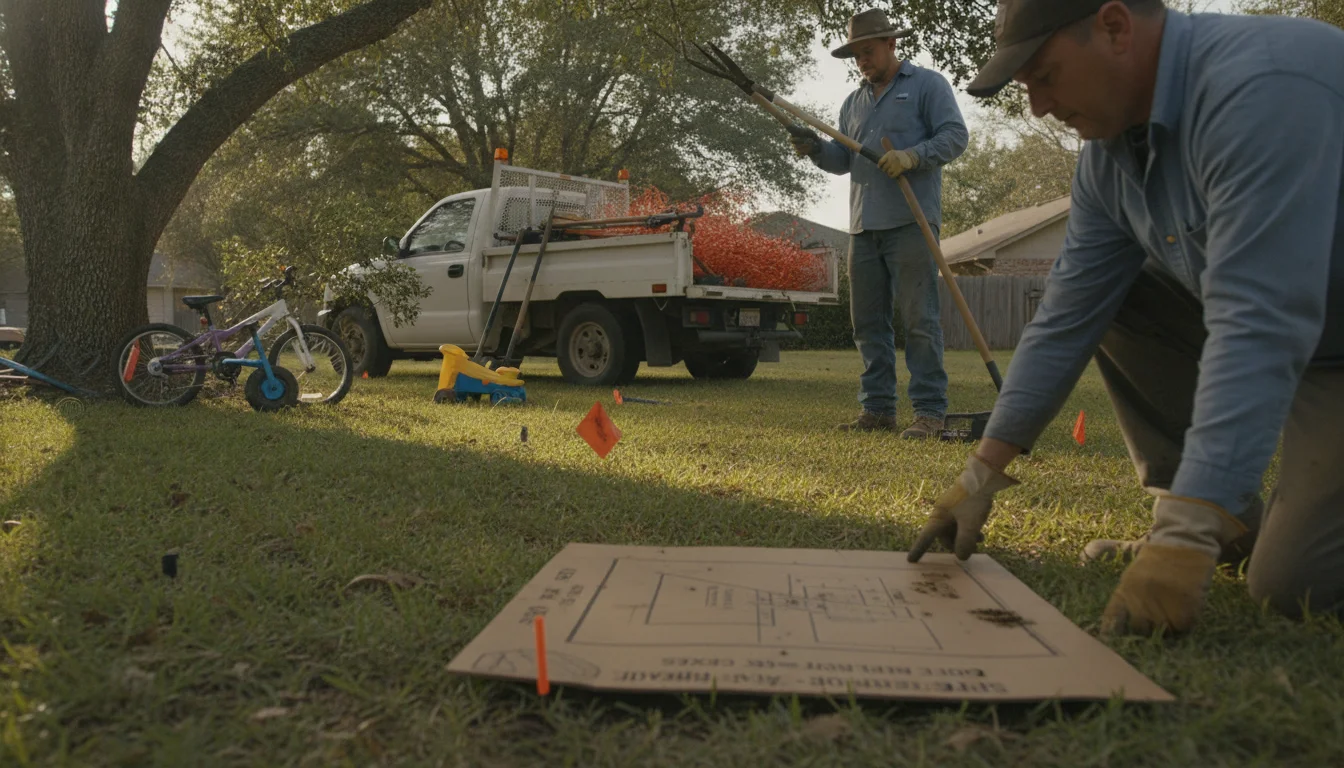
Access has an outsized impact. Crews need a path for machines and for setting the tank. A direct route with firm ground is ideal. Tight gates, steep slopes, soft lawn, or decks over the path slow the job. If a crane or compact loader is necessary, staging and timing change accordingly.
Excavation varies by depth, soil, and safety planning. Clay clings to equipment. Sand can cave. Rock requires careful breaking or different tools. High groundwater demands pumps, trench boxes, or timing the dig for drier conditions. These measures protect the crew and nearby structures.
Think about what’s around the work zone. Trees, patios, pools, and sheds can limit room. Utilities such as water and electrical lines run underground. Crews call utility locates before digging. If your property has a well, minimum separation distances apply. Local health rules set spacing between wells, tanks, and fields to protect water quality in Rogers.
If access is tight, plan staging early. Move vehicles and yard items. Trim low branches. Mark sprinkler zones. Thoughtful prep helps the team set up, dig, and backfill with fewer interruptions—and reduces yard restoration later.
Access distance, obstacles, and equipment needs
Long or obstructed routes may call for extra hose lengths during pump-out, smaller machines, or lifts. Plan the path from street to set point. Photos help the estimator understand constraints early.
Soil conditions, groundwater, and slope considerations
Wet or unstable soils slow progress. Steep grades require careful benching. In high water table areas, crews may adjust depth or add components approved under local code so the system performs reliably.
System Type, Code Requirements, and Add‑Ons
Systems vary by site needs. A conventional setup directs effluent to a drain field for soil treatment. Some properties require alternatives such as aerobic treatment units that add oxygen to enhance breakdown. Others may use drip dispersal or mounds where usable soil depth is limited. System type influences both materials and steps.
Local and state codes govern design, setbacks, and approvals. Health departments review plans and issue permits. Inspectors verify key stages—tank set, piping, and final cover. These steps safeguard public health and groundwater. A calculator can estimate likely permit steps, but your final plan must meet rules specific to Rogers and Arkansas.
Add-ons can simplify maintenance and protect components. Risers bring lids to grade, making service straightforward. Effluent filters protect the field by catching fine solids. Alarms warn of high water in pumped systems. Some sites use distribution boxes, dosing tanks, or pumps. Each part has a clear job and may be required by your local code.
If the old system was a cesspool or included damaged lines, the new design may change. In those cases, a Septic Inspection and a design review point you to the right approach. Properties near wells or sensitive areas follow stricter standards—normal and expected to ensure long-term protection.
Conventional vs. alternative systems and components
Conventional systems rely on gravity where grade allows. Alternatives may add treatment stages, pumps, or drip dispersal to satisfy site limits and code. Every component must match the approved design flow.
Required testing, permits, and inspections
Soil evaluations, percolation checks, and health department permits are common. Staged inspections confirm the work matches the approved plan. For general homeowner guidance, see the U.S. EPA’s septic resources (EPA).
Regional Pricing and Project Timing
Local market conditions affect labor and materials. During busy seasons, crews book up and lead times grow. Supply for tanks, pipe, and risers can vary. Weather matters, too. Heavy rain raises groundwater and may pause excavations; dry stretches allow faster digs and cleaner backfill.
In Rogers, soil and lot styles differ by neighborhood. Older streets may feature narrow drives and mature trees, while newer subdivisions might offer wider yards but sometimes stricter code requirements. Your estimate should reflect these patterns. Local installers know which pockets drain well after storms and which sites hold water longer.
Emergencies compress timelines. If your tank fails and the yard is saturated, crews may stage pumping and temporary measures before full replacement. That protects the site and keeps daily routines manageable. Scheduling may also follow inspector availability.
Plan your project for a window that fits weather and family needs. Consider school breaks, major home events, and the seasonal rain cycle. Ask about lead times when you first reach out. Good planning reduces stress and helps crews deliver steady, thorough work.
Labor, materials, and market availability
Installer capacity and supplier stock set the pace. Early planning and clear scopes make it easier to secure a spot and the right materials without last-minute changes.
Seasonality, emergencies, and scheduling windows
Wet seasons and frozen ground can slow or pause excavation. Urgent failures benefit from temporary stabilization. A measured plan protects the site until full replacement is complete.
What a Professional Quote Should Include—and When to Request One
A strong quote is specific and easy to follow. It lists the tank type and size class, excavation approach, bedding, inlet and outlet fittings, risers, and any effluent filter. It should also address drain field or leach field work, yard restoration, and haul-off. Permits, inspections, and testing appear as line items or allowances.
Ask for documentation. You should receive a basic site sketch, materials list, and notes confirming code compliance. Warranty terms belong in writing. Timelines should outline dig day, set day, inspection, and final grading. If pumps or alarms are included, the quote should name models and controls.
If you’re unsure whether full replacement is necessary, start with a Septic Inspection. Some problems live in the drain field or a clogged filter. Drain Field and Leach Field Repair or a targeted fix can restore flow when the tank is sound. If your system is very old, undersized, or still backing up after service, consider Septic Tank Installation and Replacement. Homes with aerobic units should schedule Aerobic Septic System Service to evaluate repair versus replacement. Properties with legacy pits often need Cesspool Service to retire unsafe setups and transition to a code-compliant system.
Clear signs that replacement is more appropriate than repair include chronic sewage odors, persistent soggy ground above the field, frequent pump-outs with rapid return of symptoms, visible tank cracks, and health department notices. If your calculator results suggest replacement and a site visit confirms it, a complete, written quote will give you clarity on scope and steps in Rogers.
Line items and documentation to expect in a bid
Expect a written scope, materials list, permits and inspections, disposal notes, staging plan, timeline, and warranty terms. Clear drawings and component details make comparing bids straightforward.
Frequently Asked Questions
Q: How often should a septic tank be pumped?
A: Many homes need regular pumping based on household size and use. A Septic Inspection can set an appropriate interval. Spacing laundry, fixing leaks, and keeping wipes and grease out will help. Ask a local pro in Rogers to tailor a plan for your home.
Q: How long does it take to pump a septic tank?
A: Pumping often takes under a few hours, but access, tank depth, and lid location can add time. Crews also check baffles and filters. If lids are buried or hard to reach, extra digging adds steps. Good prep, such as marking lids, speeds the visit.
Q: How often to empty a septic tank?
A: “Empty” means removing solids and scum to restore working volume. The interval depends on users, tank size, and what goes down the drain. An inspection sets a safe schedule. Regular care helps avoid strain on the leach field and keeps treatment steady.
Q: How to find a buried septic tank?
A: Start at the main cleanout and follow the sewer line straight out. Look for subtle depressions or greener grass bands. A probe can help locate the lid area. If unsure, schedule a Septic Inspection—pros use maps, locators, and safe digging to expose lids quickly in Rogers.
Q: Is there a list of things not to put in a septic tank?
A: Yes. Avoid wipes, grease, oils, chemicals, paint, coffee grounds, and cat litter. Do not flush medications. Use septic‑safe paper and cleaners. These steps protect tank bacteria and the drain field. The EPA’s homeowner tips provide helpful basics (EPA).
Key takeaways
- A calculator gives a planning range, not a bid.
- Biggest drivers: system type, access, and soil.
- Bedrooms and water habits guide right-size choices.
- Local codes set design and permit steps.
- Clear, written quotes remove guesswork.
Conclusion: Septic Tank Pumping Rogers is here to help plan your next step. From early estimates to final inspections, local insight matters. The team serves Rogers with care and clear explanations. Ready to plan your project in Rogers? Contact us.
If you are not sure which of these you are dealing with, it is worth having someone look at it before it turns into a bigger job. Get in touch with Septic Tank Pumping Rogers today and we will tell you where you stand.